At some point in every ambitious trip planning, there's a moment (usually around hour four of reading contradictory TripAdvisor reviews while toggling between sixteen browser tabs) when the whole thing starts to feel less like a stress reliever and more like a chore.
At some point in every ambitious trip planning, there's a moment (usually around hour four of reading contradictory TripAdvisor reviews while toggling between sixteen browser tabs) when the whole thing starts to feel less like a stress reliever and more like a chore.
A guided tour is a pre-planned trip where most or all of the logistics are handled by a tour operator. As the knots in your shoulder relax, you start to appreciate the reason you packed your bag, put on your Hawaiian shirt and got on a plane. That's the gift of opting for a guided tour: all you have to do is show up. Someone else has already sorted the accommodation, transport between destinations, entry tickets, and a guide who knows what they're talking about. Depending on the tour, some meals and activities are also included in the package price.
Just like a skateboard and a BMW theoretically do the same thing (getting you from point A to B), a guided tour is also only as good or bad as the level of guidance you need, and the level of play your wallet can afford.
To put it plainly, guided tours come in all shapes and sizes. They run from large coach tours with 30 people and a fixed, minute-by-minute itinerary to small-group adventures with 10 travellers staying in locally run guesthouses, and everything in between. You can have fully private tours where it's just you, your group, and a dedicated guide who can adjust the day based on what you want, or you could crane your neck to hear what your guide is saying as you peer at him through a telescope at the opposite end of a long line.
However, no matter your fate, some things are given. These basic components remain the same across all guided tours:
After you've developed an appetite for group tours, you want to isolate the elements and travel with more like-minded people. Small-group tours typically consist of 8 to 16 people, and focus on more immersive, less tourist-facing experiences. These tours tend to use public transport and locally owned accommodation rather than coaches and chain hotels, which means they feel closer to independent travel without the planning overhead. Contiki is probably one of the best-known operators in this space, with trips that run the full range from 'active' (expect to walk a lot) to 'comfort' (expect better beds).
Honestly, if money weren't an issue, wouldn't you want someone to help you save time and cover more activities? It's just the convenience of it all. That's the thing most people cite when asked: the time saved on research, the mental load lifted by not having to coordinate 14 moving parts, the relief of not having to figure out a regional train system in a language you don't speak.
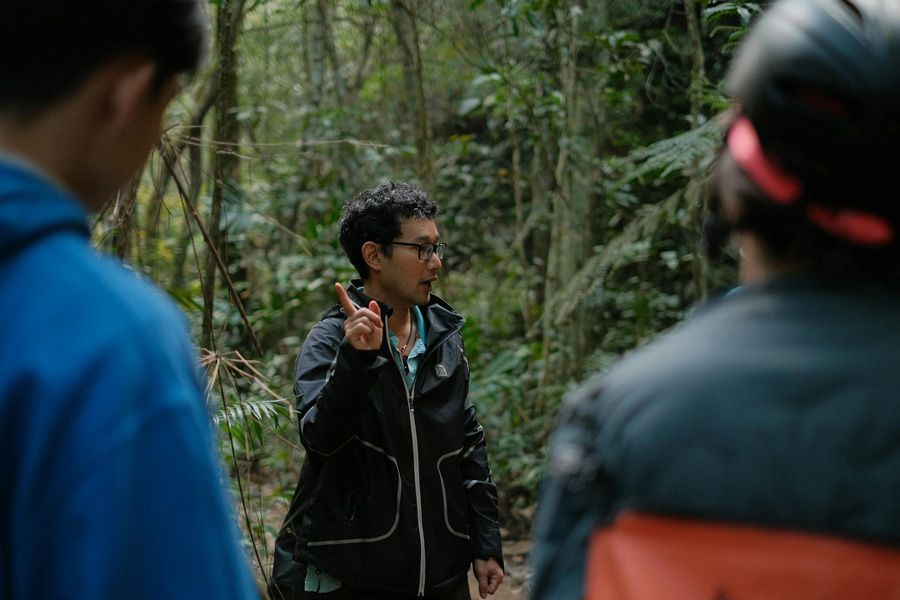
Local knowledge that changes the trip: Admit it, we've all become used to having AI at our fingertips, giving us background information on things we don't have to deep-dive about. Well, that's kind of like what a guide is — someone who's spent years in a destination who can tell you why it matters, what the local opinion about it is, which version of the history the government prefers and which version is closer to the truth. That layer of context is hard to replicate from a guidebook.
Access independent travel can't match: Imagine standing in a queue, waiting to get in and see a famous landmark or monument. What if you could skip the line and avoid the usual tourist traps, focusing instead on actual off-the-beaten-track gems that only the locals know about? Tour operators negotiate access that isn't available to individuals. That might mean a private early-morning entry to a site before the crowds arrive, a visit to a village or community that doesn't appear on any map, or a cooking class with a family rather than a cooking school. These experiences are closed off to independent travellers simply because they require advanced relationships with local partners.
The social element: We get it, you're Indiana Jones, but even then, sometimes having just yourself for company can lead to very stale conversations. A guided tour provides instant company, especially for solo travellers. You're not guaranteed to like everyone (that would be statistically unusual), but you're guaranteed to have people around, which, for a lot of travellers, is the whole point.
Efficiency for bucket-list destinations: Here's the thing nobody tells you about holidays: you're on borrowed time. If you have 10 days and a destination with six things you'd genuinely regret missing, a guided tour covers them without you spending any of those 10 days working out how to get between them.
Safety and ease in challenging destinations: This one often slips through the cracks but is especially relevant for destinations where infrastructure is complex, the political situation requires local knowledge to navigate safely, or where going alone would limit what you can access. East Africa safaris are the obvious example; you need guides, vehicles, and permits regardless of how experienced a traveller you are.
What Are the Downsides?
In travelling as in life, if something sounds too good to be true, it's best to step back and pause for a moment. Guided tours are not for everyone, and there's no point pretending otherwise. Here are a few things to be vary of:
You move at the group's pace. If the group is slower than you, you'll feel it. If it's faster, you'll feel that too.
The schedule is fixed. The afternoon you'd have spent wandering down a side street and stumbling into a good restaurant doesn't really exist on a tour.
The upfront cost looks high. Tour packages include a lot, and the price tag can be a shock, but only before you've unpacked what's actually in it.
That last point is worth addressing directly. The headline cost of a guided tour typically includes accommodation, inter-destination transport, guide fees, and entry tickets. These are costs that independent travellers pay separately, often at higher rates because they're booking individually rather than in bulk. The gap between guided and independent travel is often smaller than it looks.
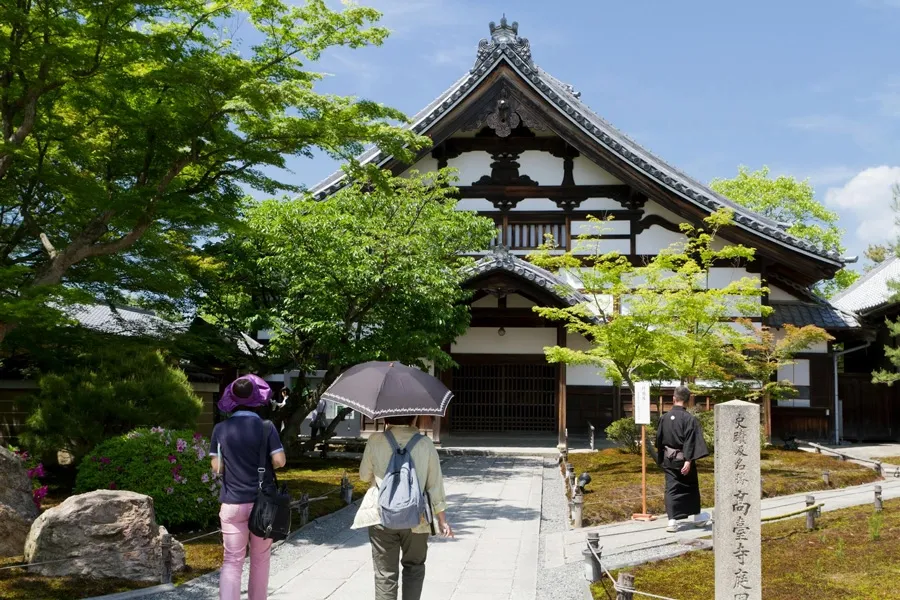
A trip to Japan ranks on more bucket lists than almost any other destination, and for good reason: it's extraordinary. It's also quite difficult for a first-time visitor to navigate independently. The train system alone, while one of the best in the world, is one of the most complex. Getting a JR Pass, understanding which trains it covers, and working out the right routing between Kyoto, Tokyo, Hiroshima, and Osaka takes serious research. Add in the cultural protocols that aren't obvious to Western visitors, and the language barrier that exists in force once you leave the major cities, and a guided tour starts to look less like a shortcut and more like common sense.
In a nutshell, tours work especially well in trips to Japan because:
The rail network requires planning expertise to use efficiently, especially around reservations and regional passes.
Cultural nuances (temple etiquette, onsen rules, eating customs) are easier to navigate with local guidance.
Language barriers outside Tokyo and Osaka are significant and affect everything from restaurant menus to street signs.
Search BA Reward Seat Availability
Find available reward seats with British Airways and Iberia.
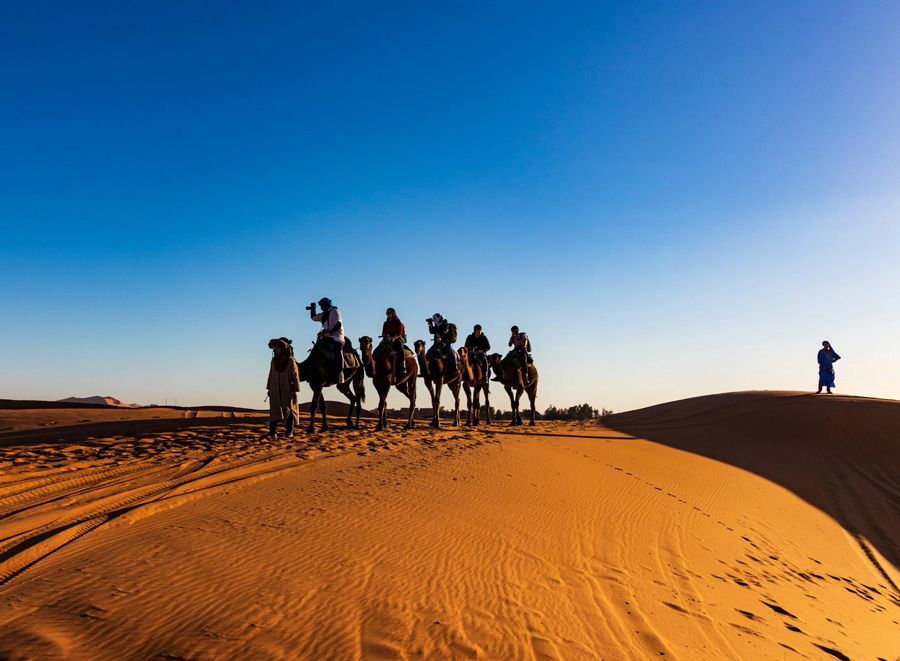
Morocco is close enough that it feels like it should be easy, and in some places it is. In others, especially the medinas of Fes and Marrakech, where the street layout defies any known logic, and the signage assumes you already know where you're going, it's a riddle that takes some solving. The medinas are genuinely labyrinthine; getting lost is part of the experience until it isn't, at which point you've been walking in circles for 40 minutes, and the light is fading. Desert trips to the Sahara require transport, guides, and overnight camp logistics. A tour handles all of this.
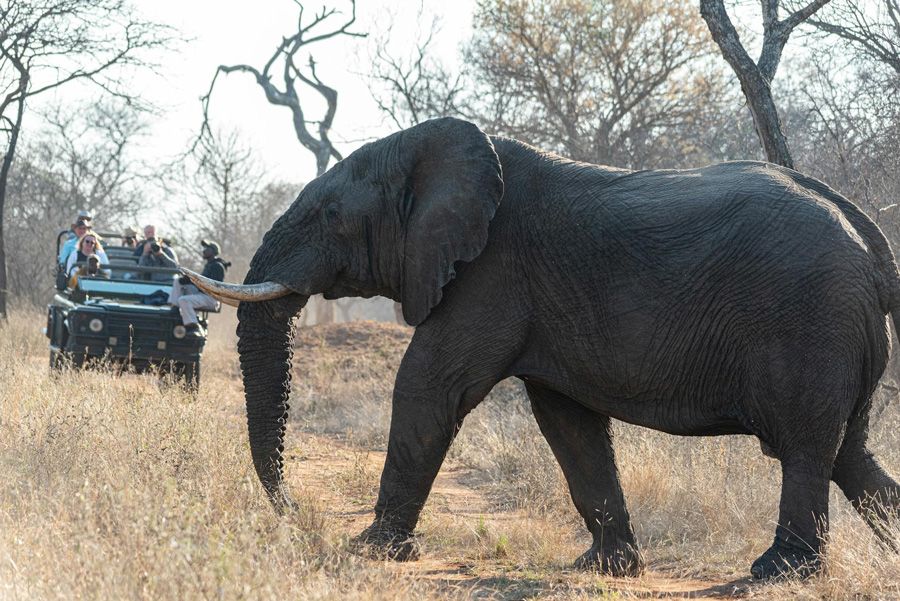
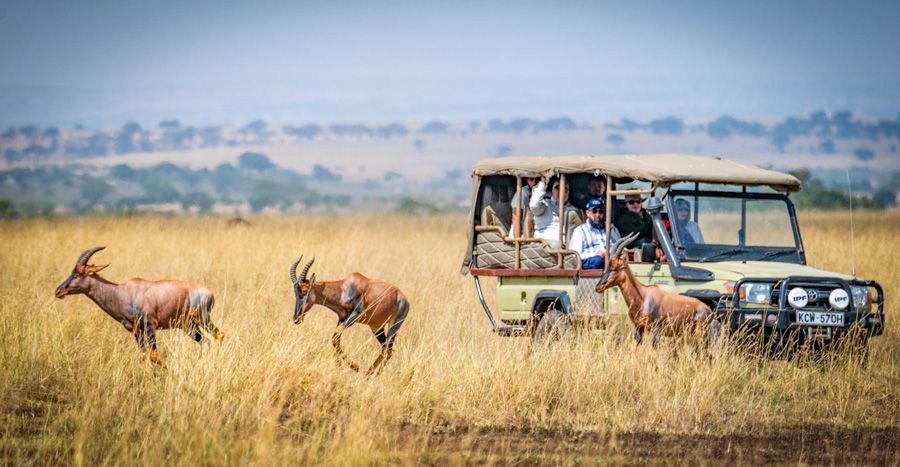
East African safaris are some of the most bucket-listed experiences in the world. Seeing as you're putting yourself in one of the last truly wild terrains left in the world, having a guide to help you navigate through an area where you don't rank among the top five predators on the food chain is a necessity.
The national parks require licensed guides and park-registered vehicles. Wildlife spotting in the Masai Mara or the Serengeti depends on understanding animal behaviour, reading the landscape, and understanding the herds' seasonal movements. That knowledge takes years to develop. A guide with it will show you a leopard in a tree that five independent travellers have driven past that morning.
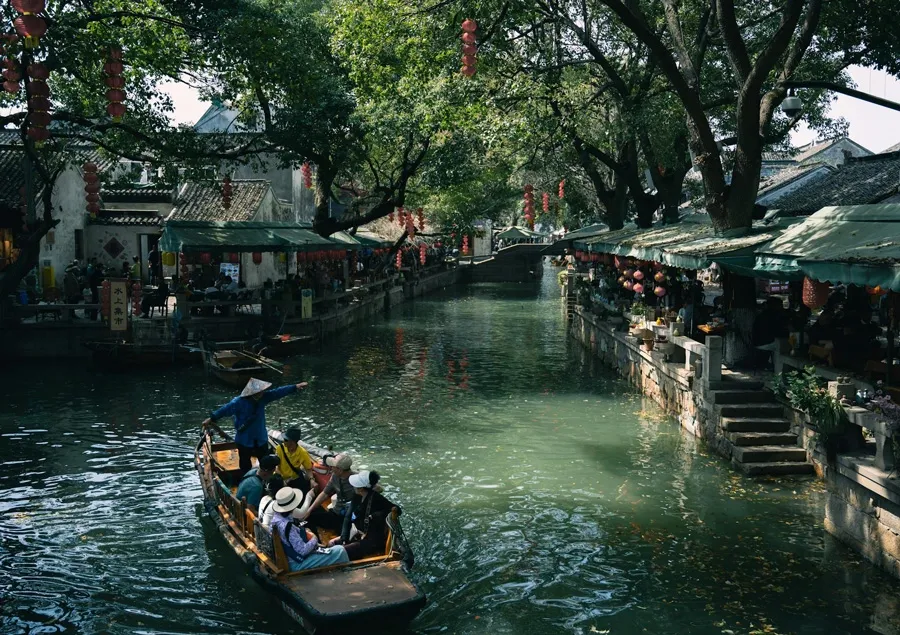
Most travellers draw a blank when trying to imagine the best of China because there's so little we know about the 'Middle Kingdom' that spans enormous distances. From Beijing and the Great Wall in the north, Xi'an and the Terracotta Army in the centre, Shanghai on the east coast, and Guilin's karst mountains in the south, covering a meaningful portion in two weeks independently requires navigating a payment system that works primarily through apps tied to Chinese bank accounts, a transport system that's excellent but vast, a language barrier that's nearly total for non-Mandarin speakers, and a digital environment where most Western apps and websites don't function. A guided tour removes all those friction points.
The operator matters as much as the destination. Contiki is a strong option for small-group adventure tours as their trips run across all five destinations covered in this guide, they use local accommodation and transport, and their group sizes are capped.
You don't need to commit to the guided tour format for every trip. Independent travel is faster to book and easier to adjust for something like a city break in Lisbon or a week in the Greek islands. But there are circumstances where a tour is the clearly better option:
You're visiting a logistically complex destination, where planning the trip well takes a level of expertise most people don't have.
You want to see a lot in a short time and can't afford to spend two days of your holiday working out connections.
Before booking any tour, check three things: the group size (smaller is almost always better), the accommodation standard (one-night stays in inferior hotels mid-tour are a common cost-cutting move), and what's actually included versus what's listed as 'optional extras' that turn out to be mandatory.
A guided tour is a pre-planned trip where most or all of the logistics are handled by a tour operator. As the knots in your shoulder relax, you start to appreciate the reason you packed your bag, put on your Hawaiian shirt and got on a plane. That's the gift of opting for a guided tour: all you have to do is show up. Someone else has already sorted the accommodation, transport between destinations, entry tickets, and a guide who knows what they're talking about. Depending on the tour, some meals and activities are also included in the package price.
Just like a skateboard and a BMW theoretically do the same thing (getting you from point A to B), a guided tour is also only as good or bad as the level of guidance you need, and the level of play your wallet can afford.
To put it plainly, guided tours come in all shapes and sizes. They run from large coach tours with 30 people and a fixed, minute-by-minute itinerary to small-group adventures with 10 travellers staying in locally run guesthouses, and everything in between. You can have fully private tours where it's just you, your group, and a dedicated guide who can adjust the day based on what you want, or you could crane your neck to hear what your guide is saying as you peer at him through a telescope at the opposite end of a long line.
However, no matter your fate, some things are given. These basic components remain the same across all guided tours:
After you've developed an appetite for group tours, you want to isolate the elements and travel with more like-minded people. Small-group tours typically consist of 8 to 16 people, and focus on more immersive, less tourist-facing experiences. These tours tend to use public transport and locally owned accommodation rather than coaches and chain hotels, which means they feel closer to independent travel without the planning overhead. Contiki is probably one of the best-known operators in this space, with trips that run the full range from 'active' (expect to walk a lot) to 'comfort' (expect better beds).
Honestly, if money weren't an issue, wouldn't you want someone to help you save time and cover more activities? It's just the convenience of it all. That's the thing most people cite when asked: the time saved on research, the mental load lifted by not having to coordinate 14 moving parts, the relief of not having to figure out a regional train system in a language you don't speak.
Local knowledge that changes the trip: Admit it, we've all become used to having AI at our fingertips, giving us background information on things we don't have to deep-dive about. Well, that's kind of like what a guide is — someone who's spent years in a destination who can tell you why it matters, what the local opinion about it is, which version of the history the government prefers and which version is closer to the truth. That layer of context is hard to replicate from a guidebook.
Access independent travel can't match: Imagine standing in a queue, waiting to get in and see a famous landmark or monument. What if you could skip the line and avoid the usual tourist traps, focusing instead on actual off-the-beaten-track gems that only the locals know about? Tour operators negotiate access that isn't available to individuals. That might mean a private early-morning entry to a site before the crowds arrive, a visit to a village or community that doesn't appear on any map, or a cooking class with a family rather than a cooking school. These experiences are closed off to independent travellers simply because they require advanced relationships with local partners.
The social element: We get it, you're Indiana Jones, but even then, sometimes having just yourself for company can lead to very stale conversations. A guided tour provides instant company, especially for solo travellers. You're not guaranteed to like everyone (that would be statistically unusual), but you're guaranteed to have people around, which, for a lot of travellers, is the whole point.
Efficiency for bucket-list destinations: Here's the thing nobody tells you about holidays: you're on borrowed time. If you have 10 days and a destination with six things you'd genuinely regret missing, a guided tour covers them without you spending any of those 10 days working out how to get between them.
Safety and ease in challenging destinations: This one often slips through the cracks but is especially relevant for destinations where infrastructure is complex, the political situation requires local knowledge to navigate safely, or where going alone would limit what you can access. East Africa safaris are the obvious example; you need guides, vehicles, and permits regardless of how experienced a traveller you are.
What Are the Downsides?
In travelling as in life, if something sounds too good to be true, it's best to step back and pause for a moment. Guided tours are not for everyone, and there's no point pretending otherwise. Here are a few things to be vary of:
You move at the group's pace. If the group is slower than you, you'll feel it. If it's faster, you'll feel that too.
The schedule is fixed. The afternoon you'd have spent wandering down a side street and stumbling into a good restaurant doesn't really exist on a tour.
The upfront cost looks high. Tour packages include a lot, and the price tag can be a shock, but only before you've unpacked what's actually in it.
That last point is worth addressing directly. The headline cost of a guided tour typically includes accommodation, inter-destination transport, guide fees, and entry tickets. These are costs that independent travellers pay separately, often at higher rates because they're booking individually rather than in bulk. The gap between guided and independent travel is often smaller than it looks.
A trip to Japan ranks on more bucket lists than almost any other destination, and for good reason: it's extraordinary. It's also quite difficult for a first-time visitor to navigate independently. The train system alone, while one of the best in the world, is one of the most complex. Getting a JR Pass, understanding which trains it covers, and working out the right routing between Kyoto, Tokyo, Hiroshima, and Osaka takes serious research. Add in the cultural protocols that aren't obvious to Western visitors, and the language barrier that exists in force once you leave the major cities, and a guided tour starts to look less like a shortcut and more like common sense.
In a nutshell, tours work especially well in trips to Japan because:
The rail network requires planning expertise to use efficiently, especially around reservations and regional passes.
Cultural nuances (temple etiquette, onsen rules, eating customs) are easier to navigate with local guidance.
Language barriers outside Tokyo and Osaka are significant and affect everything from restaurant menus to street signs.
Search BA Reward Seat Availability
Find available reward seats with British Airways and Iberia.
Morocco is close enough that it feels like it should be easy, and in some places it is. In others, especially the medinas of Fes and Marrakech, where the street layout defies any known logic, and the signage assumes you already know where you're going, it's a riddle that takes some solving. The medinas are genuinely labyrinthine; getting lost is part of the experience until it isn't, at which point you've been walking in circles for 40 minutes, and the light is fading. Desert trips to the Sahara require transport, guides, and overnight camp logistics. A tour handles all of this.
East African safaris are some of the most bucket-listed experiences in the world. Seeing as you're putting yourself in one of the last truly wild terrains left in the world, having a guide to help you navigate through an area where you don't rank among the top five predators on the food chain is a necessity.
The national parks require licensed guides and park-registered vehicles. Wildlife spotting in the Masai Mara or the Serengeti depends on understanding animal behaviour, reading the landscape, and understanding the herds' seasonal movements. That knowledge takes years to develop. A guide with it will show you a leopard in a tree that five independent travellers have driven past that morning.
Most travellers draw a blank when trying to imagine the best of China because there's so little we know about the 'Middle Kingdom' that spans enormous distances. From Beijing and the Great Wall in the north, Xi'an and the Terracotta Army in the centre, Shanghai on the east coast, and Guilin's karst mountains in the south, covering a meaningful portion in two weeks independently requires navigating a payment system that works primarily through apps tied to Chinese bank accounts, a transport system that's excellent but vast, a language barrier that's nearly total for non-Mandarin speakers, and a digital environment where most Western apps and websites don't function. A guided tour removes all those friction points.
The operator matters as much as the destination. Contiki is a strong option for small-group adventure tours as their trips run across all five destinations covered in this guide, they use local accommodation and transport, and their group sizes are capped.
You don't need to commit to the guided tour format for every trip. Independent travel is faster to book and easier to adjust for something like a city break in Lisbon or a week in the Greek islands. But there are circumstances where a tour is the clearly better option:
You're visiting a logistically complex destination, where planning the trip well takes a level of expertise most people don't have.
You want to see a lot in a short time and can't afford to spend two days of your holiday working out connections.
Before booking any tour, check three things: the group size (smaller is almost always better), the accommodation standard (one-night stays in inferior hotels mid-tour are a common cost-cutting move), and what's actually included versus what's listed as 'optional extras' that turn out to be mandatory.
 Simon
Simon