What is your cabin crew really doing during boarding?
 Kayleigh
15 Jul 2026
Last Updated: 16 Jul 2026
Flight Club
You step onto the aircraft, still a little flustered from the gate dash, and a member of the cabin crew catches your eye and says hello. It feels like a small courtesy, the sort of greeting you barely register before you start hunting for your row. In those few seconds, though, that crew member has taken in far more about you than you would guess. The welcome at the door is a rapid safety and operational assessment, dressed up as a friendly hello.
Many of you are keen aviation enthusiasts who love knowing how the cabin really works, and plenty more get a flutter of nerves every time the doors close. Either way, understanding what crew are doing in that moment is reassuring rather than unsettling, and it sits neatly alongside the kind of Avios travel tips we share to help you fly better. So next time someone greets you at the aircraft door, here is what is actually going on.
The hello
Cabin crew are safety professionals first and hosts second. The greeting gives them a few uninterrupted seconds with every passenger, one by one, before the cabin fills up and attention is split a hundred ways. Here is what they are looking for.
- Safety screening. Crew are trained to scan quickly for signs of intoxication, illness, anxiety, distress or anything that looks out of place. A passenger who seems unsteady or unwell at the door is far easier to help on the ground than at 38,000 feet.
- Passengers who may need a hand. They note older travellers, families with young children, unaccompanied minors and anyone with a disability or reduced mobility, so the right support is ready before it is needed.
- People who could help in an emergency. Crew also clock able-bodied passengers, often those near the exit rows, who could assist with a heavy door or lend a hand if an evacuation were ever required.
- Heading off problems early. Once the aircraft door is shut, the options for managing a disruptive or unfit passenger shrink dramatically. Spotting a concern during boarding lets the crew deal with it calmly while everyone is still on the stand.
- Running the cabin. On top of all that, they are checking tickets, pointing you to the right side of the aircraft, keeping an eye on cabin bags that need to fit the policy, and reading the passenger mix to plan the service ahead, from who might want what at meal time to which nervous flyer may appreciate a quiet check-in. Crew even clock how people are dressed.
The takeaway is simple: that hello bundles safety, logistics and customer service into one smooth, friendly exchange. It only looks like small talk.
What cabin crew quietly clock at the door
To make it concrete, here is a quick look at what crew tend to notice in those opening seconds, why it matters, and what it means for you as a passenger.
| What crew notice | Why it matters | What it means for you |
| Signs of intoxication or illness | Safety and fitness to fly before the doors close | Board calm and clearly well, and you sail through |
| Reduced mobility, families, older travellers | So assistance is ready when it is needed | Flag any help you need and it will be arranged |
| Able-bodied passengers near exits | Potential helpers in the unlikely event of an evacuation | You may be asked to confirm you are happy to assist |
| Nervous or distressed flyers | Early reassurance keeps the cabin settled | Tell crew you are anxious, they will check on you |
| A Sunflower lanyard or hidden disability | A discreet signal that someone may need patience or time | Wear it and support comes without you having to explain |
That last row is worth knowing about. The Hidden Disabilities Sunflower, first introduced at London Gatwick and now recognised at hundreds of airports worldwide, is a green lanyard that quietly tells staff you have a non-visible condition and may need a little extra understanding. Cabin crew are trained to spot it, which is exactly why they are watching as you board.
So, can flight attendants deny boarding?
This is the question that often follows once people realise the greeting is a safety check, and the honest answer is yes. Can flight attendants deny boarding? They can, and occasionally they do. If a passenger appears heavily intoxicated, unfit to fly or likely to put safety at risk, the crew and the captain have the authority to refuse to carry them. It is rare, it is never done lightly, and it is always grounded in safety rather than mood.
For the vast majority of us, the practical version of can flight attendants deny boarding is far less dramatic: arrive in good shape, be straightforward with the crew, and you will never give it a second thought. It is also worth knowing your rights when things go wrong for reasons outside your control, such as overbooking. Our guide on what happens when an airline can bump you from a flight even with a reward seat booking explains where you stand, and reassures you that paying with Avios does not cost you any passenger protections.
How to get better service on flights: travel tips from airline staff
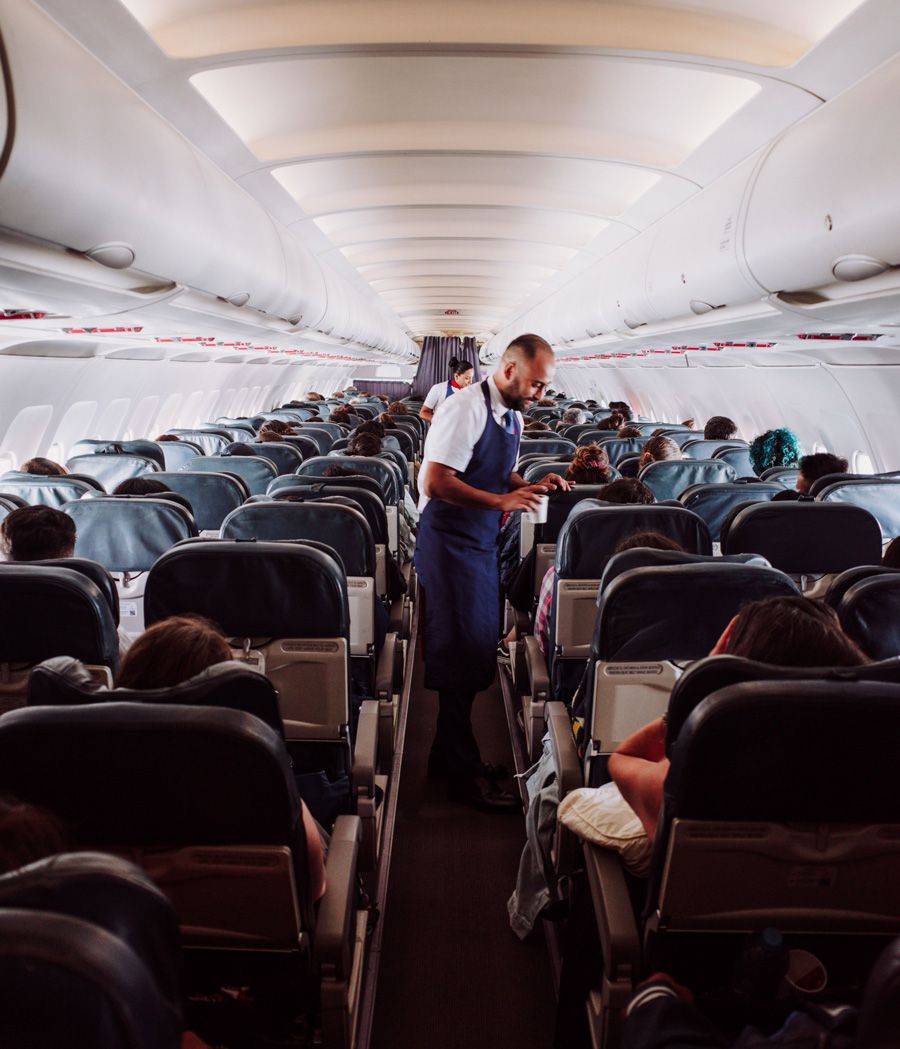
Now for the part you can actually use. Once you understand what crew are doing at the door, it becomes obvious how to get better service on flights, and most of it costs nothing. These are the kind of travel tips from airline staff that quietly make a flight smoother for everyone.
- Make eye contact and say hello back. A warm, unhurried greeting reads as a settled, easy passenger. It is the simplest of all the insider airline tips for Avios collectors, and it sets the tone for the whole flight.
- Board ready. Have your bag sorted, your seat number to hand and your headphones out before you reach the door. Smooth boarding keeps the aisle moving and puts crew on your side.
- Speak up early. If you are nervous, travelling with children or need any assistance, tell crew as you board rather than mid-service. They have already noticed, and a quiet word means they can plan around you.
- Wear your Sunflower lanyard if you have a hidden condition. It does the explaining for you and prompts crew to give you the time you need.
- Be patient and polite when things are busy. Among genuine travel tips from airline staff, this comes up again and again: the crew go out of their way for passengers who are calm and kind, not the ones clicking the call bell during boarding.
None of this is about gaming the system. The best travel hacks for frequent flyers are rarely tricks at all, they are good habits that make you the passenger crew are glad to have on board. Stack a few of these travel hacks for frequent flyers together and the difference in how a flight feels is real.
Where the real upgrade in service comes from
Friendliness gets you a long way, but the biggest single change to your inflight experience is the cabin you sit in, and that is where collecting and spending Avios earns its keep. The smartest Avios travel tips all point the same way: use your Avios to move up front, where the service, space and comfort step up dramatically.
A premium seat that would cost a small fortune in cash can come down to a sensible Avios figure plus taxes and fees. To show the value more clearly, here is how that looks on a popular long-haul route, using off-peak return reward pricing alongside typical cash fares.
| Cabin | Avios from | Taxes and fees from | Cash price from |
| World Traveller Plus (Premium Economy) | 110,000 Avios | around £450 | around £900–£1,400 |
| Business Class | 220,000 Avios | around £599 | around £2,000–£3,500+ |
Treat those numbers as a guide only: reward pricing shifts, peak dates cost more, and the cash taxes and fees are always payable on top of your Avios. The fairest way to plan is to check the exact figures for your own route and dates with our Avios Calculator, which shows the Avios cost alongside the taxes and fees due.
If you are weighing up the cabins, our side-by-side guides to World Traveller Plus Avios value upgrades and flying British Airways Business Class spell out what you actually get for your Avios, including the Club Suite with its door and direct-aisle access on long-haul routes. Among practical Avios travel tips, the most valuable is also the most honest: premium-cabin reward seats give you the best comfort per Avios, but they are the first to sell out.
New to all this? Start with our beginner-friendly guide to the British Airways Club, learn the genuinely useful secret ways to collect Avios so you build a balance faster, and make sure you are not letting points expire by reading why you should not waste your Avios. Those three together are the foundation of every good set of Avios collector travel tips.
Find the seats worth boarding for
Knowing how the crew read the cabin is fun, and being an easy passenger makes any flight nicer. But the change you will feel most is sitting in the cabin you actually want, and that comes down to landing the right reward seat before everyone else does.
Premium reward seats are scarce and they disappear fast, which is the one problem good manners cannot solve. That is what Availability Alerts are built for: tell us the route, dates and cabin you want, and we will watch British Airways reward flights for you and notify you the moment a seat appears. Use our Flight-by-Flight Search to see exactly which departures have reward seats in your chosen cabin, or open the Worldwide Map from our Reward Flight Finder homepage if you know your dates but not yet your destination. For the full picture of how it all fits together, read the smartest way to find BA reward seats in 2026.
Your actionable takeaway: board calm, friendly and ready, flag anything you need early, and let Availability Alerts do the watching so your Avios turn into the premium seat where great service is built in. That is the whole of it, the small human stuff and the smart Avios stuff working together.