
Uber wants to be more than the thing you frantically open when your flight lands at 11:47 pm, and the last train has long since departed. The company has announced a major expansion into travel by adding hotel bookings directly into its app through a partnership with Expedia Group, revealed at the company’s annual GO–GET product event in New York. This means users can now search and book accommodation without ever leaving the platform.
The hotel partnership is the headline news, but the company has also announced a dedicated Travel Mode, AI-powered voice bookings, on-demand shopping and a globally expanded Uber One membership. In short, Uber would quite like to manage more of your trip than the ten-kilometre journey between the airport and your hotel.
If all of this sounds vaguely familiar, that's because British Airways has been heading down a similar road for years. Book flights, hotels, car hire, and experiences, earn rewards at every step and keep everything inside one ecosystem. The difference is that Uber is trying to build that world from scratch, while Avios collectors are already living in it.
So, should you be paying attention?
Yes. Not because Uber is now the best place to book your holidays, but because it’s an interesting glimpse into where travel loyalty is heading. More companies want to become one-stop shops and keep you inside their ecosystem, and more rewards programmes are competing for a share of your travel spend.
Let's take a look at what Uber has launched, how its new hotel-and-rewards model maps onto the Avios ecosystem you already use, and what it means for those of us who judge every travel purchase by one simple question: "But how many points am I getting?"
What Uber Just Announced

The main announcement is hotel bookings, built into the Uber app and powered by a formal partnership with Expedia Group. Users in the United States can now browse and book accommodation in-app, with inventory set to grow to over 700,000 properties worldwide as the rollout expands internationally. Vacation rentals from the Expedia Group brand Vrbo will be added later this year as well.
The partnership works in both directions. Uber rides will be integrated directly into the Expedia app from June, and travellers will receive push notifications before their check-in date, with discounted Uber rides for the duration of their stay.
“Travel should feel effortless, and this partnership gets us one step closer to offering a seamless traveller experience,” said Expedia Group CEO Ariane Gorin. “By connecting our two-sided marketplace with Uber, we’re bringing Uber rides directly into the Expedia app and Expedia Group’s lodging inventory into the Uber app through our Rapid API technology. Together, we’re helping travellers spend less time planning and more time enjoying the journey.”
The loyalty hooks will catch your eye if you’re used to weighing up earning rates. Uber One members earn 10% back in Uber One credits on every hotel booking, along with at least a 20% discount on a rolling list of over 10,000 hotels worldwide. Uber has also made the membership global, so credits earned on a ride in New York, Madrid or Singapore apply once you’re home, a structure any collector who’s earned points across borders will recognise instantly: keep spending within the ecosystem and get rewarded for it.
Travel Mode, Room Service and the Rest

The hotel launch is the flashy new feature, but Uber's main goal is to provide a closed loop for the entire travelling experience. A new Travel Mode within the Uber and Uber Eats apps provides airport navigation maps, curated recommendations for local restaurants and tourist attractions, dining reservations via OpenTable, and Uber’s own version of room service, with travel essentials and forgotten items like toothbrushes, chargers and over-the-counter basics delivered straight to your hotel room door. The pitch is the app as a personal travel concierge.
There are other interesting features as well: AI-powered Voice Bookings let you arrange a ride conversationally, which is useful when you’re running through an airport with luggage in both hands. A new Shop for Me feature lets you request items from virtually any store, even those not listed on the platform. A redesigned ‘Where to?’ search bar now surfaces rides, food and items in a single search. And in select cities, anyone reserving an Uber Black or Black SUV can add an Uber Eats order to the booking, so the coffee is waiting in the cupholder for that early airport run.
That last feature is minor, but telling of the direction the company is going. Uber no longer treats a ride as point-to-point transport. It treats it as a bundled experience with add-ons, which is precisely how a points collector already thinks about a trip: every segment is an earning or redemption opportunity.
The ‘Everything App’ Play
“Uber is becoming an app for everything, helping people go, get, and now travel all in one place,” said Uber CEO Dara Khosrowshahi. “We’re all living through a moment of real cognitive overload: too many apps, too many decisions, too much noise. At the end of the day, our job is to help people reclaim their time, spending less of it managing the logistics of life and more of it actually living.”
He was equally direct about why hotels are the natural next step. “Uber is already the go-to platform for global travel,” Khosrowshahi said at the event. “If we’re the first app that you open when you get into your city, it’s only natural for us to try to make the entire trip, the entire experience, simpler.”
This is the same blueprint for the super-app model, already proven in Asia by platforms like WeChat and Grab, which combine transport, food, shopping, and now accommodation through a single interface. Uber can quickly scale into a market dominated by Booking Holdings and Airbnb by leveraging Expedia’s inventory rather than building its own. Unlike those incumbents, it can link accommodation with transport and food delivery into a continuous experience.
The only question that remains is how customers will react to it. Launching a hotel feature is easy. Convincing people to book high-value stays through a ride-hailing app is not. Success will depend on ease of use, pricing and, above all, trust.
What This Means for Your Avios Strategy
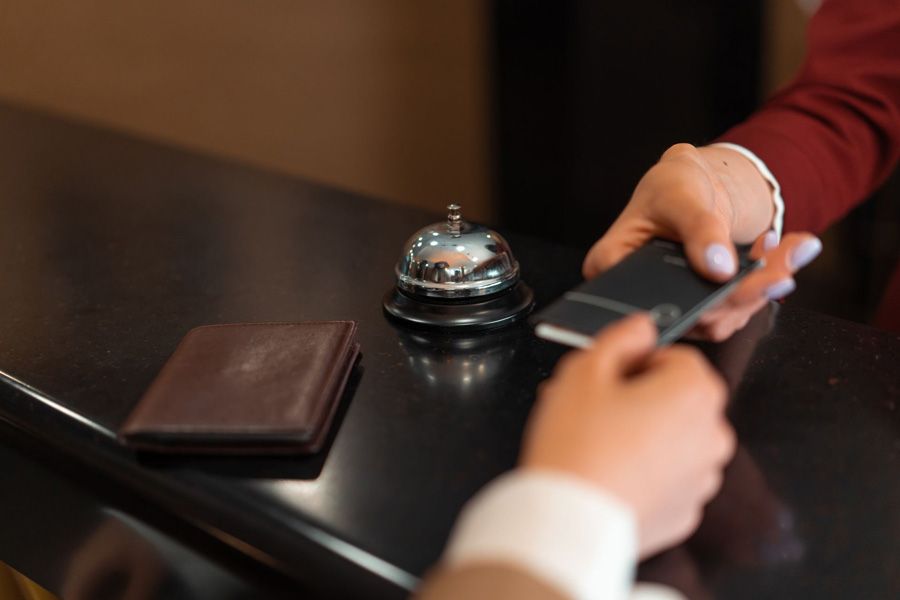
Uber’s hotel move is not that different from something you already use. When you book through the Avios or BA hotel portals, you’re tapping aggregated inventory, typically powered behind the scenes by the likes of Expedia or Booking.com, in exchange for earning currency instead of booking directly. Uber is borrowing a familiar loyalty playbook, rewarding users for keeping their spending inside a single ecosystem. The reward currency happens to be Uber credits rather than Avios. The model: in both cases, don’t book direct. Book through us and earn rewards.
In fact, British Airways and the British Airways Club already operate as a kind of fragmented super-app across your whole trip, with flights as the core earning engine, hotels via partner portals, car hire through Avis and Budget, retail through the Avios eStore, and credit card spend feeding the balance throughout. Like Uber and Expedia, BA wants to keep you inside its ecosystem from departure to return — it just spreads that ecosystem across multiple interfaces rather than a single app. Every major travel platform is now chasing the same closed loop, where booking, earning and spending all happen in a single system.
So, where does Uber already fit into your collection? You can earn Uber Avios points by linking your British Airways Club account to your Uber profile, which turns eligible rides in participating markets into a steady trickle of Avios on journeys you’d take anyway. Run the numbers through an Avios calculator, and the rates are modest next to flights or credit card sign-up bonuses. But as Avios earning strategies go, free points on existing spend is about as low-effort as it gets, and you should absolutely have it switched on.
The better question is whether the new hotel feature should pull any of your accommodation spend across. Our view is that it shouldn’t. If you want to maximise Avios from flights and hotels, the stronger route remains booking stays through Avios.com or BA Holidays, where the Avios earning rates comfortably beat the value of Uber One hotel credits if you have a redemption goal in mind. And the redemption goal is the whole point: to optimise Avios value per point, reward flights, especially premium-cabin, long-haul ones, remain by far the best use of your balance. No hotel cashback scheme, Uber’s included, gets close to the per-point value of a well-timed reward seat.
Note, too, that the two currencies don’t stack. You earn Uber Avios points on rides and Uber One credits on hotels. They run in parallel, not in combination. Punch both options into an Avios calculator, and the conclusion holds: the Avios earning strategies that move your balance through flights, credit card spend, household bills routed through earning partners, and targeted portal bookings are exactly the ones you were using before Uber entered the hotel business. If you’ve been researching how to earn Avios fast, nothing announced at GO–GET changes the answer.
The Bottom Line
Uber’s expansion into hotels is an interesting industry moment. It’s proof that the landscape for travellers is changing from individual bookings to entire ecosystems. For Uber, the prize is becoming the single interface for your whole trip. For you, the takeaway is simpler: keep earning Uber Avios points on every eligible ride, keep your accommodation spend flowing through Avios.com and BA Holidays to maximise Avios from flights and hotels, and keep your balance pointed at reward flights, where you can optimise Avios value per point.
The platforms will keep converging, and new earning opportunities will surface as they do. The Uber–BA ride partnership itself may well deepen as Uber’s travel ambitions grow. Stay curious, keep watching where the ecosystems connect, and let everyone else chase hotel credits. You’re playing for the flat bed at the front of the plane.