Tier 1: The Essential Classics
Let's begin with the OGs. The ones that'll get your foot in the door of every art conversation.
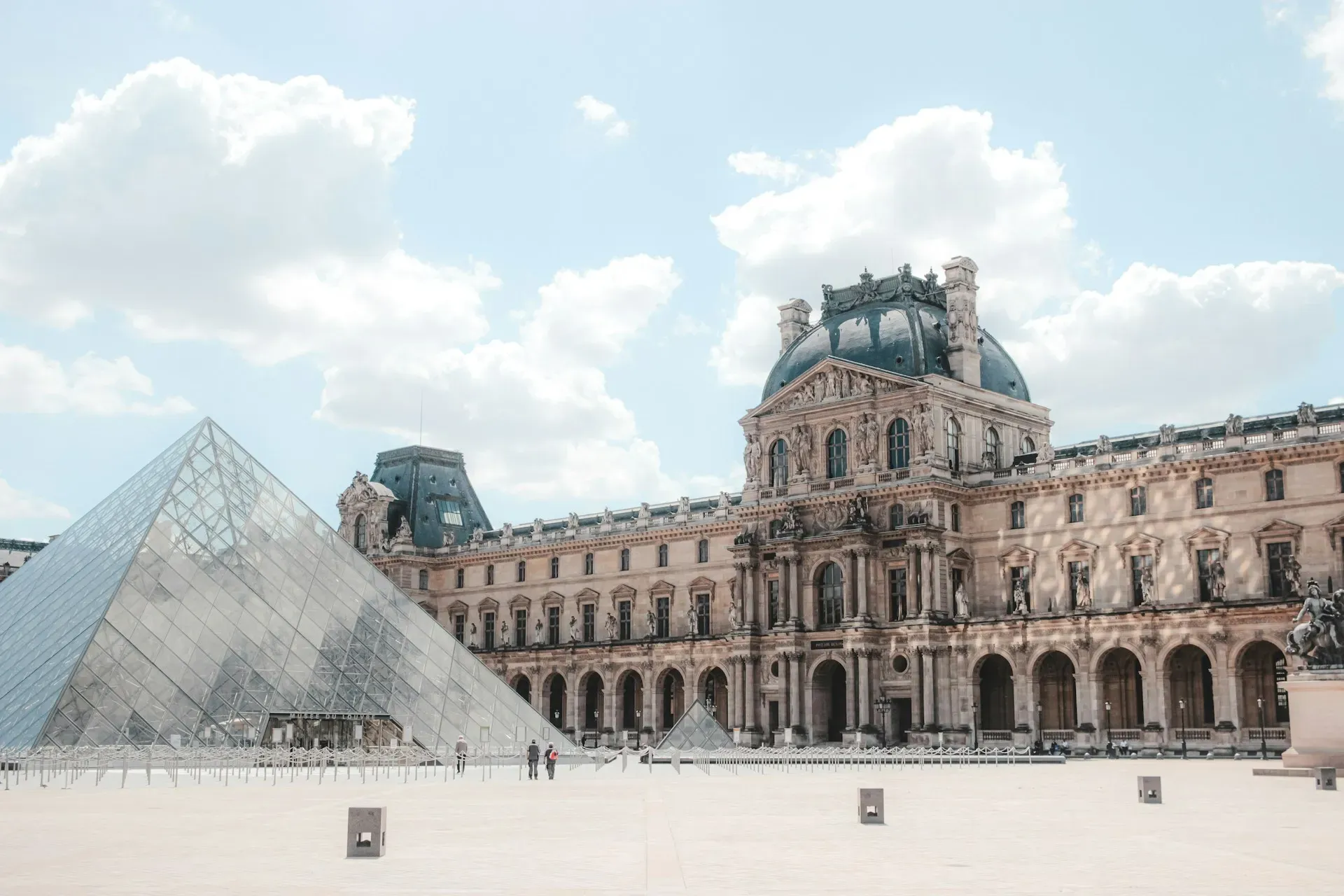
Musée du Louvre, Paris
Was there ever any doubt? Despite the recent news cycle, which makes it seem like a heist-movie destination, the Louvre is still the single best museum for seeing the foundations of European art.
It's also the place where any self-respecting art pilgrimage must begin. Paris has been making the rest of the world feel artistically inadequate for the better part of a millennium. The Louvre is not just the largest art museum in the world, but also the world's most visited, welcoming close to nine million people a year through its gleaming glass pyramid entrance. With over 35,000 works on permanent display across nearly eighteen acres of gallery space, it's less a museum and more a small country dedicated to human genius.
Here you'll find Leonardo da Vinci's work in full glory, most famously the Mona Lisa, which sits in the Denon Wing and has achieved the sort of celebrity usually reserved for pop stars (and is, as a result, usually surrounded by the same kind of jostling crowd). True connoisseurs know to give her a glance from the edges of the gallery and spend more of their time with the lesser-visited but equally astonishing works nearby.
Raphael's grand compositions, Veronese's monumental The Wedding at Cana, which, at nearly ten metres wide, rather dwarfs its more famous neighbour across the room, and Jacques-Louis David's thunderous Liberty Leading the People all deserve your attention. The Greek and Roman sculpture galleries, meanwhile, are where you encounter the Venus de Milo and the Winged Victory of Samothrace, two of antiquity's most breathtaking survivals.
The Louvre is best approached with ruthless selectivity. Pick your wing, pick your icons, and allow yourself to be surprised by what you stumble upon along the way. The Denon Wing alone could occupy a full day.
Best for: breadth and iconic masterpieces.
Key highlights:
- Mona Lisa
- Liberty Leading the People
- The Wedding at Cana
Getting there with Avios: Paris is one of the easiest Avios wins there is. Off-peak return reward seats in Economy from London cost just 20,000 Avios plus £2.

Uffizi Gallery, Florence
Probably the best single museum for the Italian Renaissance. Florence has always had an outsized sense of its own importance, and the Uffizi Gallery is the reason. Built in the mid-sixteenth century by the all-powerful Medici family (originally as their administrative offices, which gives new meaning to the concept of workplace décor), the Uffizi is now home to what is arguably the greatest concentration of Renaissance masterpieces anywhere on earth.
The collection traces the full arc of Renaissance art in a way no other museum can match. You walk through rooms in something close to chronological order, watching the story unfold: from the medieval gold-ground devotional panels of the early rooms, through the revolutionary naturalism of the fifteenth century, to the full flowering of the High Renaissance in the sixteenth.
Botticelli owns this museum. The Birth of Venus and Primavera both hang here, and both are heart-stoppingly beautiful in person. Michelangelo's Tondo Doni, the only surviving panel painting by that titan, is here too. So are major works by Leonardo, Raphael, and Titian. No other museum shows you so clearly how Renaissance art evolved, who influenced whom, and what it meant for Western painting to change everything.
An important note: Since 2024, a ticket to the Uffizi can be bundled with entry to the restored Vasari Corridor, the elevated passageway that crosses the Arno River via the Ponte Vecchio, the same private route used by the Medici themselves. It's worth the upgrade. Book tickets well in advance, visit early or after 4:00 pm to avoid the largest tour groups, and be warned: the Uffizi is large, overwhelming, and utterly magnificent. Assume you'll need to return.
Best for: Understanding how Renaissance art evolved, and seeing Botticelli, Michelangelo, Leonardo, Raphael, and Titian in a single building.
Key highlights:
- The Birth of Venus
- Primavera
Getting there with Avios: Off-peak return reward seats in Economy from London to Florence cost 26,000 Avios plus £2.
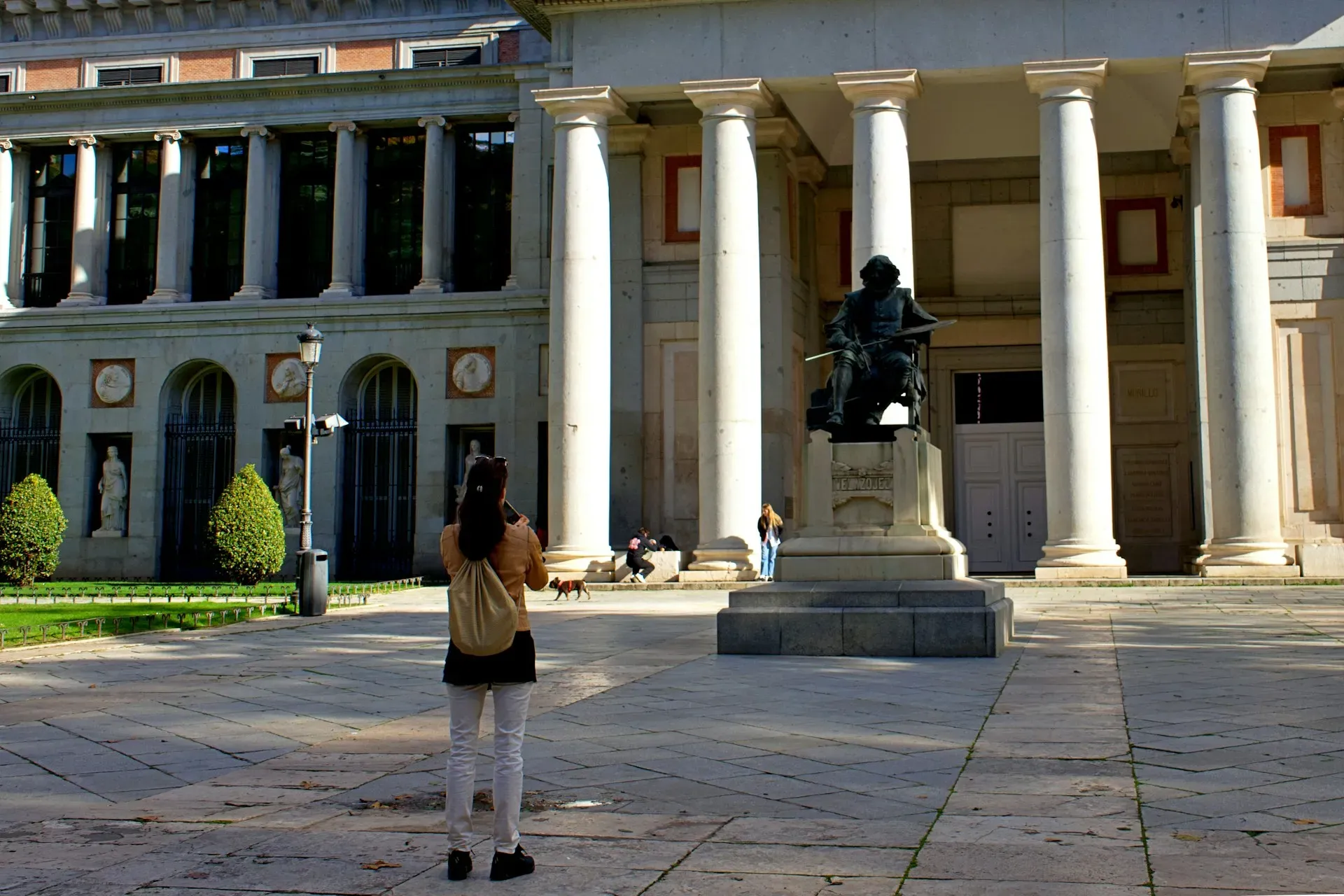
Museo del Prado, Madrid
If the Louvre is the broadest, and the Uffizi the deepest for the Renaissance, the Prado is the most intense. Some go so far as to consider it the world's greatest art museum. And with great reason, after all, it houses some of the finest Spanish painters in history, Velázquez, Goya, and El Greco, supplemented with unmatched holdings of Flemish and Italian masters, most of them acquired by the Spanish crown during its centuries as the dominant power in Europe. The result is a collection of depth and quality that leaves even seasoned museum-goers visibly shaken.
The centrepiece is Velázquez's Las Meninas (1656), hanging in Room 12. It depicts the young Infanta Margarita surrounded by her ladies-in-waiting, with Velázquez himself visible at his easel and the King and Queen appearing as reflections in a mirror at the back of the room. Who, exactly, is looking at whom? Who's the subject of the painting? These are questions the work has been asking for nearly four centuries, and it still doesn't give you a straight answer. The brushwork, the manipulation of light, and the compositional intelligence are without parallel. Picasso spent years trying to respond to it.
Nearby, Hieronymus Bosch's The Garden of Earthly Delights is an entirely different kind of genius: a medieval nightmare vision of creation, pleasure, and damnation painted in hallucinatory detail. Goya's The Third of May 1808 is one of the most powerful anti-war images ever made. Add El Greco's spiritual intensity, Rubens's Baroque grandeur, and you begin to understand why the Prado is, for the best cities to visit in Europe's art itinerary, the one that hits hardest.
Best for: depth and quality of Old Masters. Pure painting, from start to finish.
Key highlights:
- Las Meninas
- The Garden of Earthly Delights
- The Third of May 1808
Getting there with Avios: Off-peak return reward seats in Economy from London cost 26,000 Avios plus £2. Alternatively, if you're using Iberia, you can fly for as little as 15,000 Avios plus approximately £40.
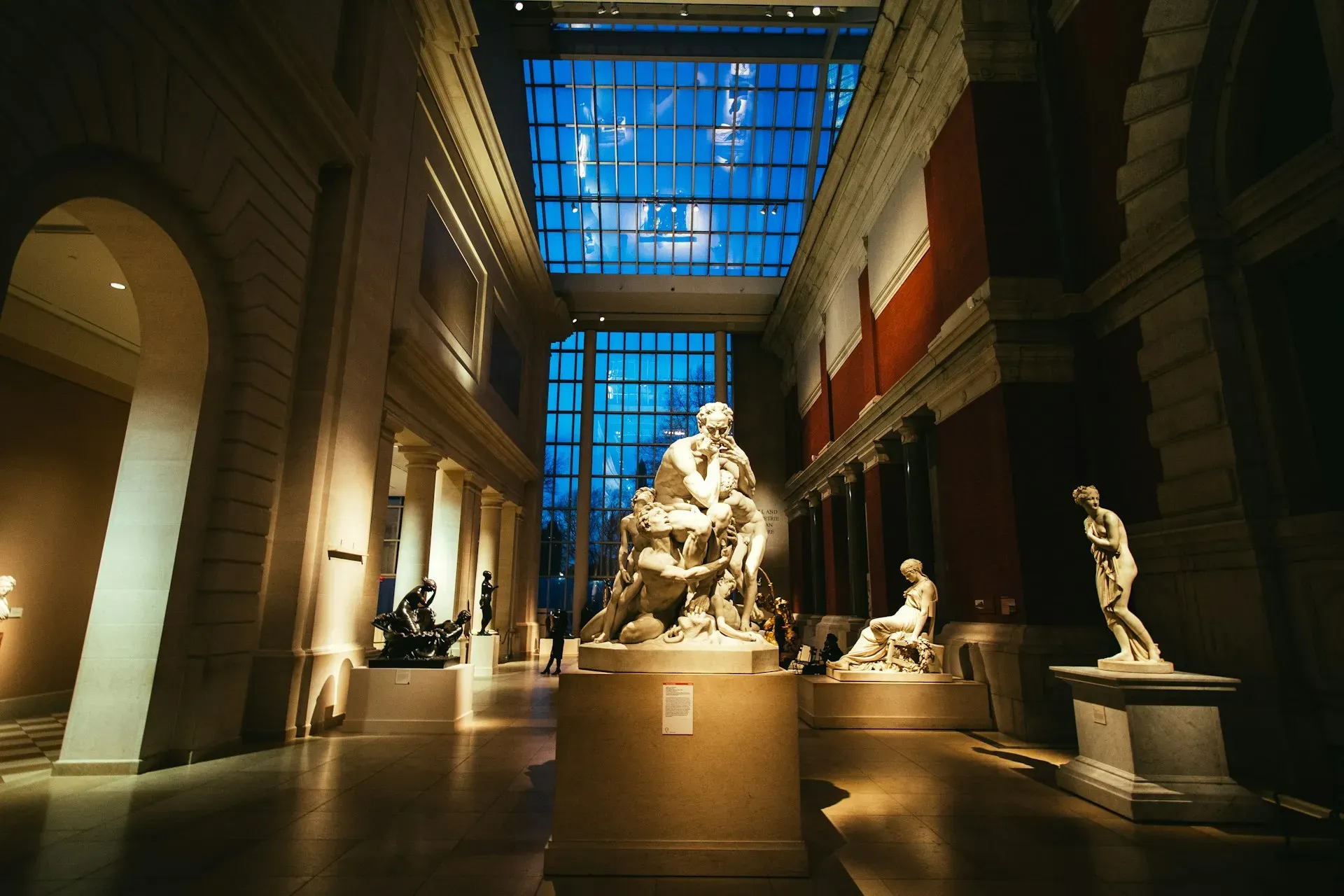
The Metropolitan Museum of Art, New York
If you're more of the laidback type who prefers reading the cliff notes, consider the Met as the doorway to civilisation made portable. With over two million works spanning five thousand years of human history, spread across four hundred galleries on Fifth Avenue in Central Park, the Met is the only museum in the world where you can move from ancient Egyptian temples to European Old Masters to medieval armour to Greek and Roman antiquities, all before lunch.
For art lovers focused on the Classics, the European painting galleries in the museum are essential, a sweeping survey of masters from the medieval period through to the nineteenth century, including major works by Vermeer, El Greco, Velázquez, and Rembrandt. But the real wild card is the Egyptian wing, one of the finest outside Cairo, containing over 26,000 artefacts spread across 39 rooms and culminating in the Temple of Dendur, a 2,000-year-old sandstone monument reassembled inside a glass-walled hall, bathed in natural light.
The Greek and Roman galleries are equally substantial, full of education in antiquity that rivals any European institution. One of the top New York art galleries, the Met is also one of the most extraordinary buildings to simply wander.
A note on cost: New York State residents and some students can pay what they wish, but most international visitors pay a fixed admission fee. Book timed-entry tickets in advance.
Best for: Range across civilisations and access to the full sweep of art history in one building.
Getting there with Avios: New York requires a larger points commitment and a longer journey. Off-peak return reward seats in Business Class from London cost 176,000 Avios plus £399. You can also make this journey using Iberia for 106,500 Avios plus approximately £250. However, bear in mind that with Iberia you would need two separate reward flights, one between London and Madrid, and then onward from Madrid to New York.
For those asking how many Avios points you'll need for a flight to New York, the answer depends on which option works best for you, but either way, this is where your Avios balance earns its keep. If you're looking for low-cost flights from London to New York, the Iberia routing via Avios remains one of the cleverest redemptions available.
Rijksmuseum, Amsterdam
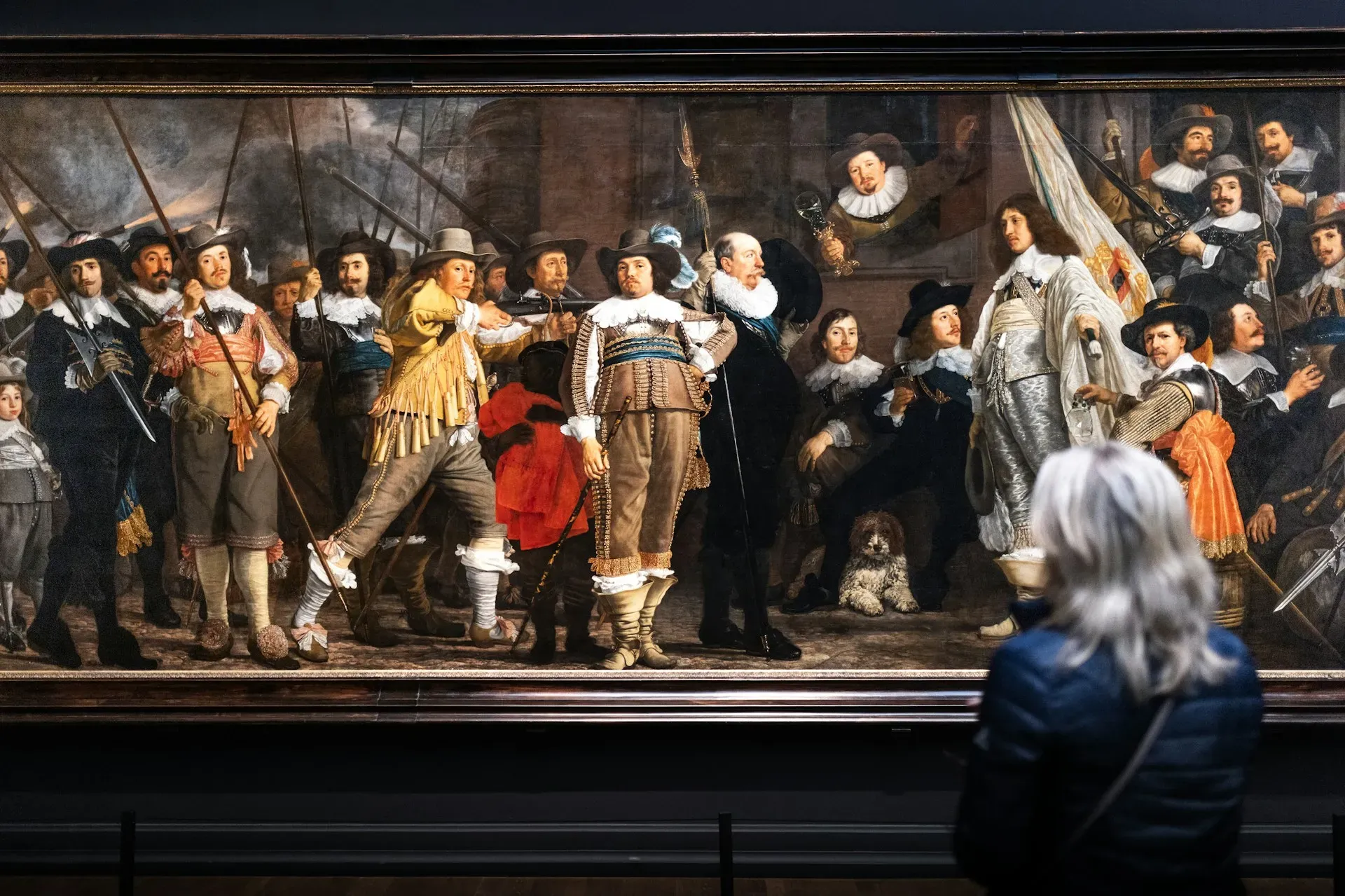
The Rijksmuseum is the home of the Dutch Golden Age, as it deals in the art of everyday life, elevating it to the level of the transcendent. Amsterdam's National Museum is the world's finest home for Dutch Golden Age painting.
The museum is anchored by Rembrandt's The Night Watch (1642), a painting of such scale and compositional energy that the entire building was originally designed around it. It now hangs at the end of the Gallery of Honour, a long, and the experience of walking towards it is theatrical. Around it hang four paintings by Vermeer, including The Milkmaid, one of the most perfect things ever committed to canvas: a maidservant pouring milk, illuminated by a fall of morning light through a window, rendered with an almost supernatural attention to texture and atmosphere. Dutch interiors, portraits of merchants and their wives, still lifes of improbable precision, the Rijksmuseum makes you see the world with different eyes.
It's worth noting that the museum also houses remarkable collections of Delftware ceramics, model ships, and decorative arts, making it far more than just a picture gallery.
Best for: Rembrandt and Dutch realism; understanding the Dutch Golden Age.
Key highlights:
- The Night Watch
- Vermeer's The Milkmaid
- Woman Reading a Letter
Getting there with Avios: Amsterdam is another excellent value Avios destination. Off-peak return reward seats in Economy from London cost 26,000 Avios plus £2.
Tier 2: Others to Consider
Of course, there's always room for more. One of the pleasures of travelling is the realisation that there's more to see every time your holiday runs out. That's why we plan for the next one. And in that spirit, here are other places that should find their place on your list once you get the bug.
Vatican Museums, Rome
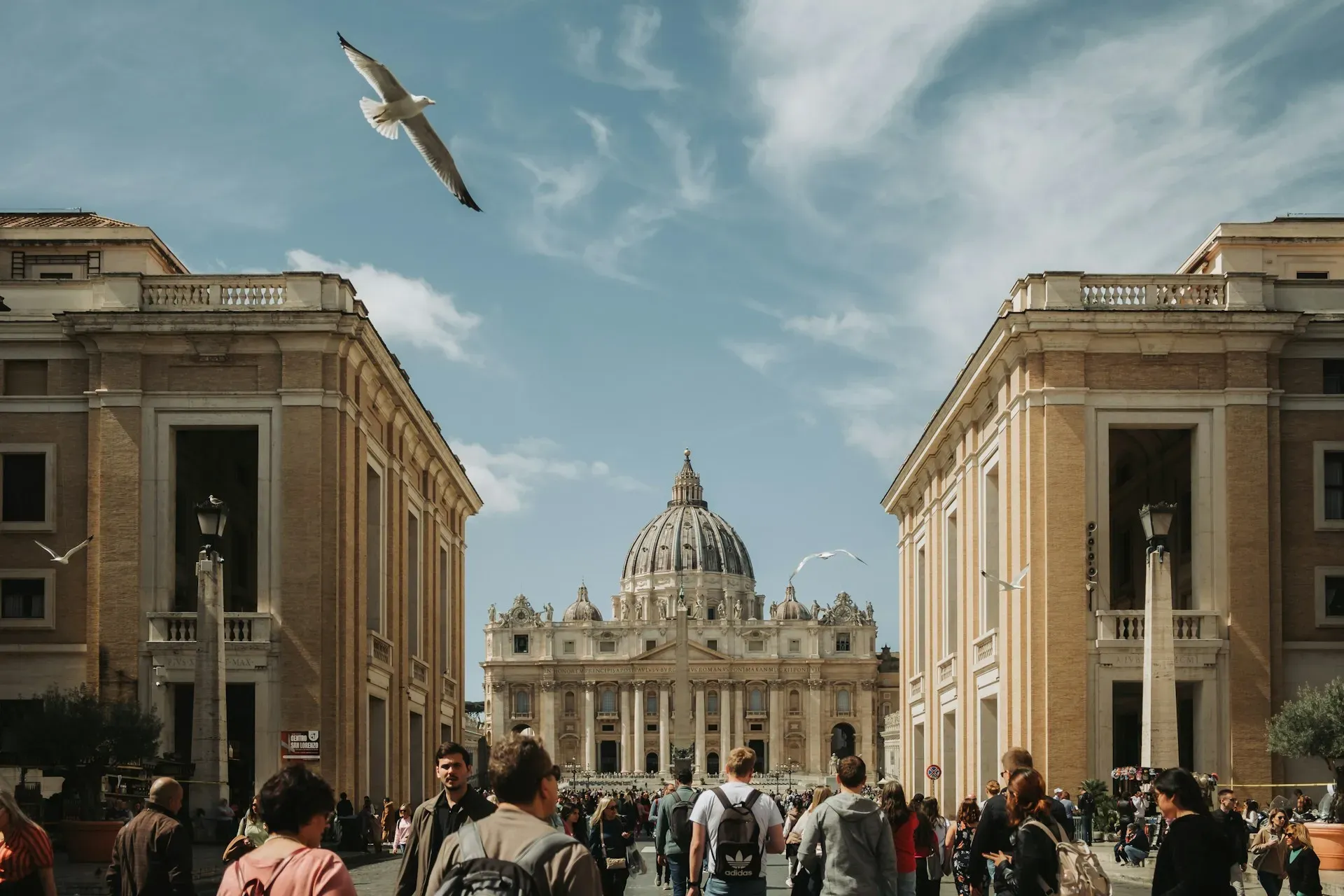
The Vatican Museums are home to one of the most jaw-dropping rooms in existence: the Sistine Chapel, where Michelangelo spent four years on his back painting the ceiling and changed the history of art forever.
The Vatican's collections also include Renaissance grandeur at every turn, Raphael's famous Rooms, classical sculpture, and ancient maps. It's extraordinary, though the sheer volume of visitors can make it feel more like a theme park than a place of contemplation. Book early, go first thing, and allow the shock of the Sistine to do what it always does: stop you in your tracks.
Musée d'Orsay, Paris
If the Louvre handles art history up to around 1848, the d'Orsay picks up where it leaves off. Housed in a magnificent, converted railway station on the Seine, it holds the world's greatest collection of Impressionist and Post-Impressionist paintings by Monet, Renoir, Degas, Cézanne, and Van Gogh, and is essential for anyone who wants the full picture of European art.
Kunsthistorisches Museum, Vienna
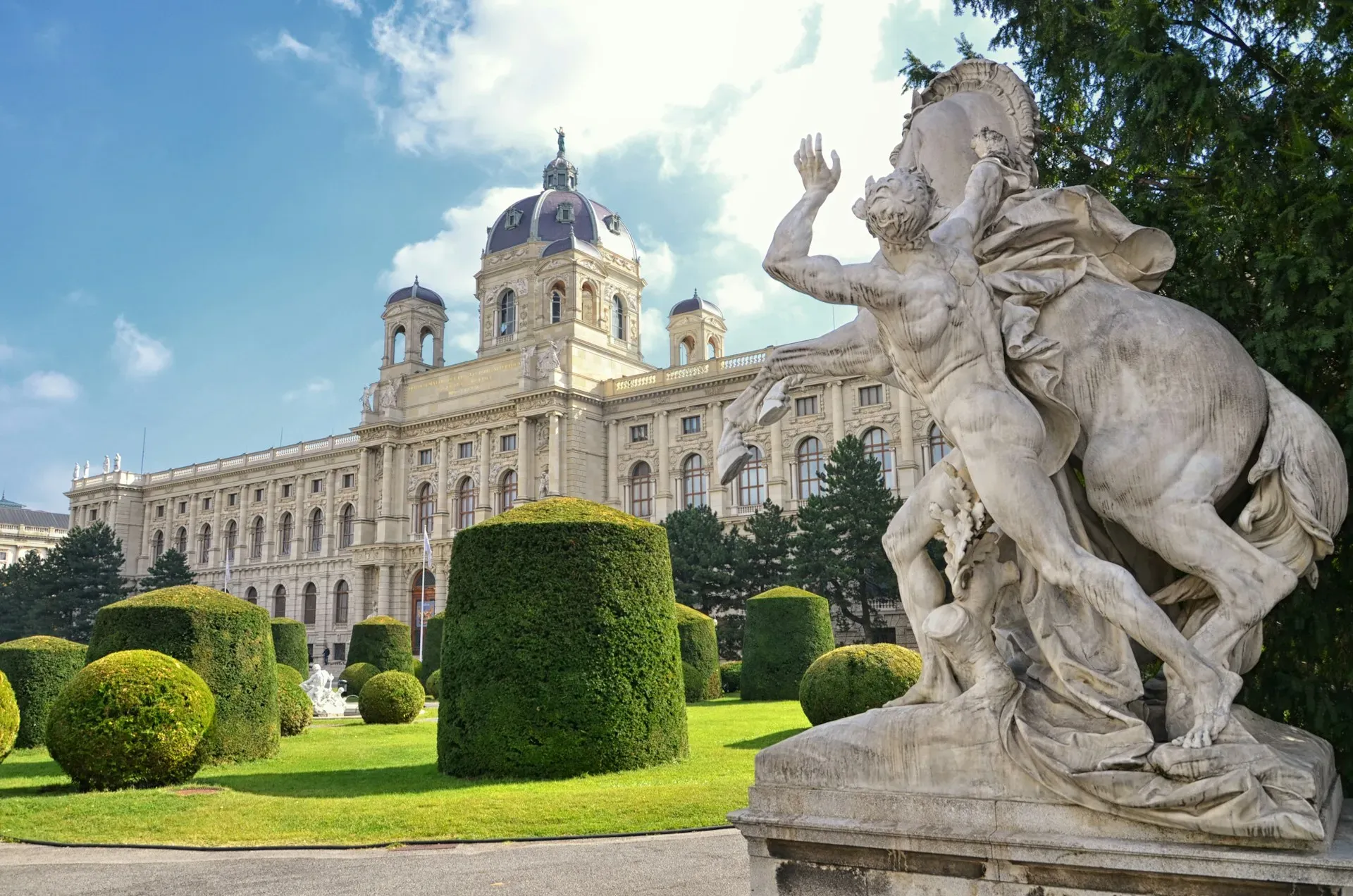
One of Europe's most underrated masterpieces, the building itself, designed in the 1890s, is as overwhelming as the collection inside. It holds exceptional holdings of Bruegel, Vermeer, and Rubens, and is much less crowded than most of its peers. A genuinely wonderful museum that deserves a far higher profile among the best art galleries in Europe.
If You Only Had One Museum
Sometimes life (read: budget) forces the brutal calculus of choosing. Here, for those who must, is the hierarchy:
- Museo del Prado: for pure painting quality, without equal.
- The Met: for accessibility and the full range of human civilisation.
- Uffizi Gallery: for a focused, immersive encounter with the Renaissance.
- Musée du Louvre: for iconic breadth and the sheer weight of cultural history.
A Note on Avios Travel
Avios travel, whether through British Airways Club, Iberia Plus, or partner airlines, remains one of the smartest ways to make cultural pilgrimages affordable. The key is to book reward seats as far in advance as possible (especially for off-peak travel, when Avios requirements are lower), to remain flexible on travel dates, and to consider the Iberia routing for transatlantic journeys where the savings can be substantial.
The Avios cost is remarkably low for European destinations like Paris, Florence, Madrid, Amsterdam, and Vienna, meaning a single well-planned year of collecting could fund a serious art itinerary across the continent.
The Old Masters painted for the ages. Your Avios, on the other hand, are not timeless; they will expire. Use them wisely and use them soon.
 Kayleigh