British Airways Club (previously Executive Club) Gold is widely considered the most valuable frequent flyer status available within the BA ecosystem. It grants access to lounges worldwide, priority boarding and baggage, and, critically for Avios collectors, enhanced reward flight availability that can transform otherwise impossible bookings into confirmed seats.
This guide is for BA Club members who want to understand how Tier Points are earned and counted, so you can build a realistic plan to qualify for BA Gold and avoid the common miscalculations that leave people frustratingly short. The goal is to give you a repeatable way to sanity-check whether Gold is feasible within your membership year and to plan flights around Tier Point totals, not guesswork.
Before earning Tier Points: Join The British Airways Club for free and always add your membership number when booking flights, holidays or extras. BA Gold is the highest earning tier in The British Airways Club, delivering enhanced reward booking power that lower tiers cannot match, and giving you oneworld Emerald status across the alliance.
Tier Points and BA Status: The Practical Rules
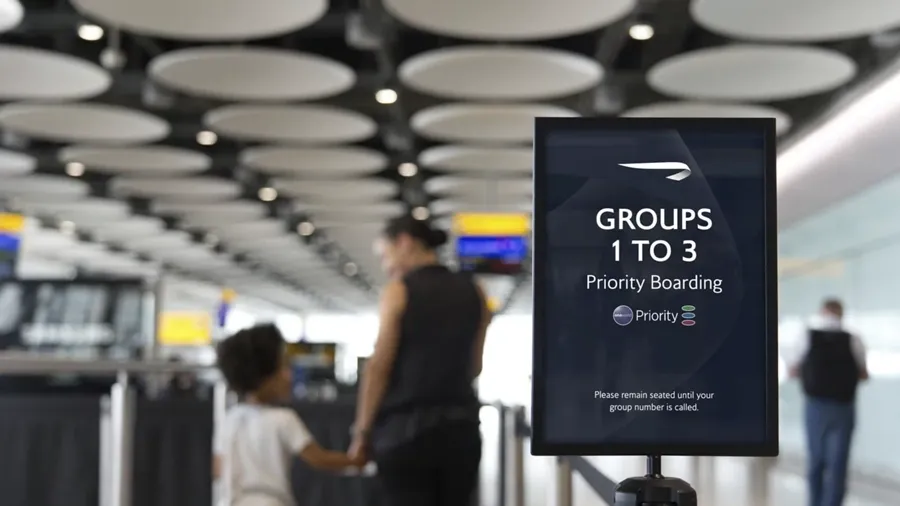
Tier Points are the status currency of The British Airways Club and remain separate from Avios, which you spend on rewards.
Tier Points track your progress towards higher Club tiers, currently starting from 3,500 Tier Points for Bronze (priority check-in, free seats 7 days out), 7,500 for Silver (free seat selection at booking, lounge access, extra baggage), and 20,000 for Gold (First Class check-in and lounges, Priority Rewards).
Earning Tier Points on BA-Marketed Flights
For flights marketed and sold by British Airways, Tier Points are earned on a revenue-based model, at 1 Tier Point per £1 of eligible spend (excluding government taxes). This means the amount you pay, rather than the distance flown, is the primary driver of how many Tier Points you earn.
In practical terms, a discounted World Traveller fare on a long-haul route may earn fewer Tier Points than a high-fare Club Europe ticket on a shorter sector, because status credit is tied to spend, not miles flown. This shift has important implications for status planning, as it rewards higher spending over pure mileage runs.
The key variables that affect earning on BA flights include:
- Cabin booked (First, Club, Premium Economy, Economy) and associated fare level.
- The total eligible spend on the ticket (base fare plus BA carrier charges and selected ancillaries, excluding taxes).
- The airline on each flight segment, as BA-numbered services follow the spend-based Tier Point rules, while many partner-operated segments still award Tier Points using traditional distance and booking-class-based tables.
Minimum Tier Point “floors” per sector are no longer the core concept for BA-marketed tickets under the latest system; with very cheap economy fares simply generating low Tier Point totals because the underlying spend is low.
Earning Tier Points on Partner Flights

This is where a critical and often misunderstood distinction emerges. When you fly on oneworld partner airlines such as Qatar Airways, Cathay Pacific, American Airlines, or Aer Lingus, Tier Point earning depends primarily on which airline markets the flight and, in some cases, whether BA can see the underlying fare.
For most flights marketed by British Airways, American Airlines or Iberia, Tier Points are now calculated on a spend basis, using the new revenue model. By contrast, many other partner marketed flights still earn Tier Points from a distance and booking class-based table, which can be particularly rewarding for long haul premium cabins. In some scenarios, such as certain package bookings or travel agent fares where the exact price is not disclosed, BA also reverts to distance-based earning even when you are flying on a BA marketed itinerary.
Common partner flight misconception
A common mistake is to assume that any flight on a partner airline will earn Tier Points from a distance-based table. In reality, the marketing carrier and fare visibility determine which model applies, so two tickets on the same partner flight can earn very different Tier Points depending on how they were booked.
Earning Model Comparison: BA vs oneworld Partners
| Marketing Airline | Earning Model | Best For | Example: LHR-JFK Business |
|---|---|---|---|
| British Airways | Spend-based (1 TP/£1) | Predictable, high fares | £2,500 fare = 2,500 TP |
| American Airlines | Spend-based (1 TP/£1) | US routes from LHR | £2,800 fare = 2,800 TP |
| Iberia | Spend-based (1 TP/£1) | Madrid/Europe hubs | £1,200 fare = 1,200 TP |
| Qatar Airways | Distance + class table | Doha premium cabins | 4,560 TP (J class) |
| Cathay Pacific | Distance + class table | HKG long-haul | 5,200 TP (J class) |
| Aer Lingus | Distance + class table | Ireland/short-haul | 1,200 TP (J class) |
Key takeaway: BA/AA/IB = simple math (spend × 1). Qatar/Cathay = check distance tables for premium cabin windfalls. Always verify fare visibility before booking partner awards.
Gold Tier Qualification
20,000 Tier Points by 31 March
All BA Club members share a fixed membership year running from 1 April to 31 March. Tier Points earned during this 12-month period count toward your status qualification for the following year. At the end of each period (31 March), your Tier Point balance resets to zero.
This fixed calendar makes planning straightforward but still requires attention to timing. Flights taken after 31 March 2027 count toward the new year (April 2027–March 2028), while late March 2027 flights contribute to your current year ending then.
Strategically positioning your highest-earning sectors around these fixed dates remains one of the most powerful levers in a Gold qualification plan, alongside permanent tier point bonuses.
The Key Trade-offs
Direct vs connecting flights
Connecting itineraries still generate Tier Points on each qualifying sector, which can sometimes produce a higher total than a nonstop option on the same route. However, this depends heavily on the fare you pay and the cabins you choose, so adding a connection is not automatically superior once you factor in time, cost and disruption.
Cabin vs cost
Premium cabins continue to be the most reliable way to accumulate Tier Points quickly, but at a significant price premium. Under the spend-driven system for BA, American Airlines and Iberia marketed flights, the relationship between spend and Tier Points is more linear than before, so paying more usually does earn more, although the value per pound still varies by route, season and fare availability.
Departure point
Flying from London Heathrow makes it easy to lean on BA’s network, but starting trips in other cities, especially those with strong oneworld partner service, can unlock different earning patterns. Some travellers use positioning flights to reach a hub where a long haul sector in a high earning cabin or under a favourable partner table can materially boost their annual Tier Point total.
Try our BA Tier Point Calculator to see exactly how different cabin/fare/route combinations will contribute toward your 20,000 Gold target.
The Soft Landing Protocol
One of the most helpful aspects of top tier status is the soft landing policy. When a Gold member fails to requalify the following membership year, they are typically protected from an immediate drop all the way back to entry level and instead step down to a lower, but still meaningful, tier for the year after.
In practice, this means that achieving Gold once can provide elevated benefits over a period that feels closer to two membership years rather than just one. When you weigh up the cost and effort of chasing Gold, that extended window of better treatment, lounge access and earning opportunities significantly improves the overall value of qualifying.
For Avios focused travellers, even the “soft landed” tier delivers worthwhile perks such as lounge access on many journeys, similar to AerClub Platinum, extra baggage and improved priority, so the safety net is more than just a consolation prize.
What Gold Status Unlocks for Avios Redemptions

Gold status offers practical booking advantages that directly influence whether you can secure the reward flights you actually want, which is often the main reason Avios collectors decide to aim for it in the first place.
Gold Priority Rewards

Gold members can use Gold Priority Rewards on BA operated flights, forcing open a reward seat by paying a higher Avios amount when standard availability is not offered. There are important limitations, including peak blackout periods such as key Christmas and New Year dates, but on many routes this is effectively a last resort lever you can pull when nothing else shows.
On routes where standard reward availability in premium cabins is persistently tight, such as long haul services to popular leisure destinations during school holidays, this capability can justify a substantial portion of the effort required to reach Gold.
Expanded reward inventory
Gold members may have access to additional economy reward inventory that does not appear for lower tiers. It will not transform every search, but on busy routes at peak times, the extra pockets of availability can make the difference between travelling on your preferred dates or compromising on timing, routing or cabin.
Lounge access and day-to-day benefits
Outside of redemptions, Gold unlocks access to BA lounges and most oneworld partner lounges, along with priority check in, extra baggage allowance and priority boarding across the network. If you go further still and reach 65,000 Tier Points in a membership year (with at least 52,000 from BA-marketed flights), you qualify for Gold Guest List, which lets you gift status to others by nominating two people for Silver and one person for a Gold Partner card, so family or close friends can enjoy similar lounge and priority perks when they travel.
These benefits do not show up in a Tier Point calculator, but they materially change how comfortable and predictable your trips feel, especially Gold upgrade vouchers, if you travel frequently.
Planning a Realistic Path to Gold Status

Reaching Gold status under The British Airways Club now requires a substantially higher Tier Point total than before, which makes deliberate planning even more important. The most realistic paths typically combine a reasonable number of flights, selective use of premium cabins, and smart routing choices that match your actual travel needs and budget.
There are a few key decisions to weigh that will shape how efficiently you earn Tier Points.
A Repeatable Framework for Gold Qualification
Earning BA Gold is not about flying as much as possible and hoping the numbers add up. It requires understanding Tier Point mechanics especially revenue-based vs distance-based earning and making deliberate choices on cabins, routes and booking channels.
Successful qualifiers share key habits: knowing their fixed membership year end; checking partner earning rules before booking; evaluating trips by Tier Point yield alongside Avios and cost; and viewing Gold as a multi-year play with soft landing benefits.
For regular Avios redeemers chasing premium cabins, Gold unlocks Priority Rewards and extra inventory that can transform availability. Your exact path to 20,000 Tier Points will be personal, but the principles stay the same: master the rules, plan ahead, track progress all year.
Common Mistakes and How to Fix Them
Mistake 1: Treating Tier Points and Avios as interchangeable
Avios can be earned heavily from non-flight activity including credit cards, shopping portals and transfer partners. Tier Points come primarily from flying, though you can now earn them through BA Holidays packages, seat selection, extra baggage fees, sustainable aviation fuel (SAF) (up to 2,000 Tier Points per year for buying SAF through BA's programme, earning 2 Tier Points per £1 from 1 April 2026), and even the BA Amex Premium Plus card (up to 2,500 TP/year). These non-flight options help but won't replace flying for Gold.
Mistake 2: Misunderstanding partner flight earning rules
It is easy to assume that any partner airline flight earns Tier Points from a distance based table, or that ticket stock alone decides the model. In reality, the marketing carrier and whether BA can see the underlying fare govern whether a flight earns on a spend or distance basis, which means two bookings on the same aircraft can yield very different Tier Points.
Mistake 3: Assuming cheap long haul economy is “good enough”
Deeply discounted long haul economy fares may feel like a lot of flying, but under both spend based and distance based models they often generate relatively few Tier Points per hour travelled. Without at least some higher yielding sectors, they are unlikely to carry you to Gold on their own.
Mistake 4: Leaving qualification to the final months
Treating Tier Point accumulation as something you will “sort out later” compresses your options and can force you into expensive or inconvenient runs near the end of your membership year. A light touch plan at the start of the year is usually enough to avoid this.
Mistake 5: Ignoring the 1 April–31 March membership year boundary
Tier Points reset at the end of the fixed 1 April–31 March membership year, so a flight taken on 1 April contributes to the new qualification period (April 2027–March 2028) and earns nothing toward your year ending 31 March 2027. Knowing this fixed calendar is essential before booking big-earning trips that could push you over the 20,000 Gold threshold.
When Tier Points Do Not Appear as Expected
Tier Points sometimes fail to appear correctly after a journey, especially when partners or schedule changes are involved. Common causes include booking class discrepancies, delays in partner airlines sending data through, codeshare confusion and promotional Tier Points that required prior registration.
If your Tier Points have not been posted after the usual processing window, you can submit a missing points claim through your BA Club account. Having your e ticket number, boarding passes and any reissued itineraries to hand will help the support team resolve the issue faster.
Frequently Asked Questions
How many Tier Points do I need for Gold?
You need 20,000 Tier Points within a single British Airways Club membership year.
Do Tier Points carry over between membership years?
No. Your Tier Point balance resets at the end of each membership year, although your status for the next year depends on what you earned in the previous one.
Can I earn Tier Points from credit card spending?
No. Tier Points are awarded for eligible flights only, not for credit card spend or other ground-based activity.
What happens if I earn Gold partway through my membership year?
Gold activates as soon as you hit 20,000 Tier Points and remains active through the end of your current membership year, plus the following year (subject to soft landing rules).
Does flying First Class earn more Tier Points than business class?
First Class usually earns more than Club World (business class), though on revenue-based flights the fare you pay remains the primary driver.
Can I earn Tier Points on any oneworld flight?
Most oneworld flights qualify, but earning rates and models (spend vs distance) vary by marketing carrier, partner and booking class, so always check the latest rules.
Is there a way to buy Tier Points?
No, you cannot buy Tier Points like Avios; they must be earned through qualifying flights, though promotions sometimes offer bonuses.
What is the difference between Gold and Gold Guest List?
Gold Guest List requires 65,000 Tier Points initially (including minimum 52,000 from BA-marketed flights) and 40,000 Tier Points to renew (including minimum 32,000 from BA-marketed flights). It adds benefits like enhanced upgrade vouchers and priority services for the most frequent BA flyers.
Do Tier Points expire forever?
Yearly Tier Points reset 31 March, but they contribute to Lifetime Tier Points. Hit 550,000 Lifetime TP for permanent Gold status regardless of yearly totals.