Forget the slopes: Use your Avios for Europe's best Après-Ski
 Kayleigh
Search for pages and actions
Search for pages and actions
KayleighKayleigh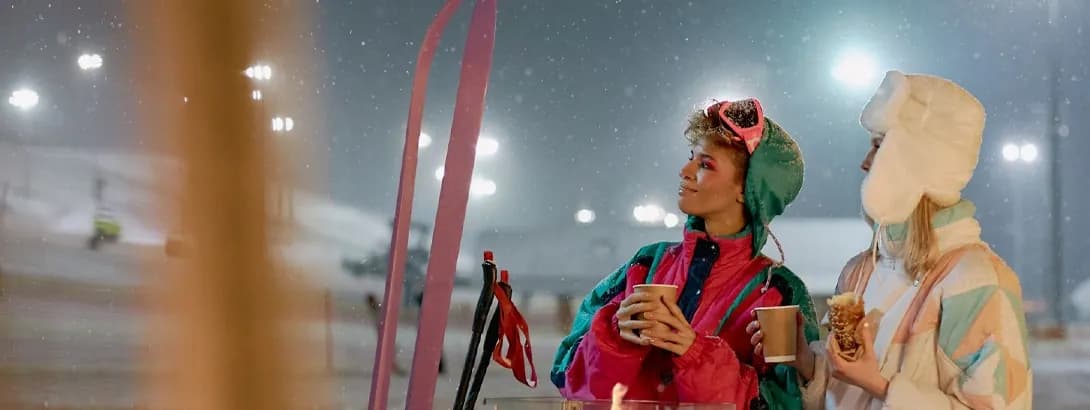
Last Updated: 27 Jul 2026
Holiday traditions evolve as we grow older. As kids, they revolve around sandcastles in summer or snowmen in winter. As adults, many of us swap those for weekends on the slopes. And once you've clicked out of your skis for the day, you'll discover that skiing is only half the experience.
Après-ski literally means “after skiing” in French, but the phrase has long outgrown its translation. What began as a wind-down after a day on the slopes is now a tradition in its own right, one that starts the moment the lifts close and carries on through mountain restaurants, live music, packed terraces and cosy Alpine lodges until dinner. Often well beyond it, too.
And the best part is that you don’t need to be a strong skier to enjoy any of this. Some of the happiest people in ski resorts never clip into a pair of skis. They spend the day at panoramic restaurants, spas, or people-watching from a mountainside terrace before joining everyone else for après. Nobody checks your piste count over a fondue.
If that sounds like your kind of ski holiday, the redemption prices are the icing on the cake. Reward flights to ski resorts are among the cheapest redemptions on the British Airways short-haul map, with several Alpine gateways costing just 20,000 Avios return in Economy. Avios ski holidays deserve a bigger reputation than they have.
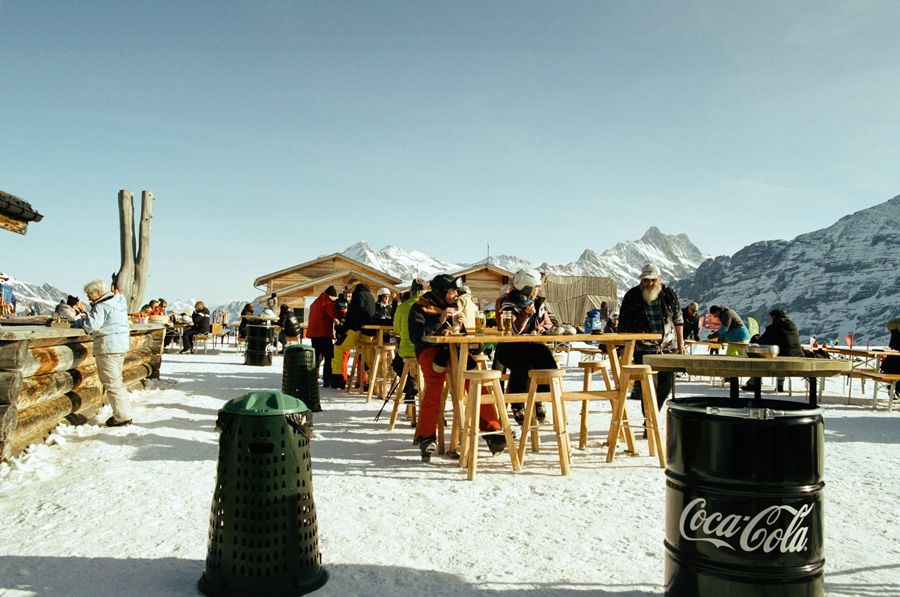
Ask anyone, and they’ll say that there’s just something in the air. After hours on the slopes, nobody's in a rush to head back to the hotel.
Depending on the resort, après-ski can mean dancing in ski boots on an outdoor terrace with a DJ, sipping mulled wine beside a roaring fire, or lingering over a long lunch with snow-covered peaks filling every window. Calories don't count at altitude. At least, that's what everyone seems to agree.
Resorts such as St. Anton and Ischgl have turned après-ski into an institution, with terraces that fill long before the last skier reaches the bottom of the mountain. If you'd rather trade that for champagne, fondue, and mountain views in Verbier or Zermatt resorts, you're equally well served. That's the beauty of après-ski: there's no wrong way to do it.
Here are four of the best après-ski destinations in Europe, and how you can reach them with Avios.
Best for: High-altitude skiing
Val d’Isère is one of Europe’s best-known ski resorts, and the après scene is a huge part of the appeal. It has everything you'd expect from a world-class ski resort, but ask regulars what they remember most and many will say the afternoons rather than the mornings.
A mountain restaurant and bar high on the slopes called La Folie Douce is widely credited with putting après-ski on the map. Lunch starts off civilised enough. By mid-afternoon, the DJ has taken over, people are dancing on tables in ski boots, and someone inevitably orders a bottle of champagne. The good news is that if you've enthusiastically embraced the atmosphere, the gondola next door will carry you safely back to the village.
Made it back to the village? Congratulations. You're only halfway through the evening. The action continues back at a restaurant called Cocorico. Its snow-front terrace fills with live music every afternoon, and dancing in ski boots is practically compulsory.
If you're still going strong, head downstairs to Doudoune, the resort's nightclub, which stays open until 4 am. Everyone else can retreat to one of Val d'Isère's cosy hotel bars or restaurants and call it a very good day.
So, which airport is best for Val d’Isère? Chambéry is the closest main gateway, about 2 hours from the resort. Geneva is the furthest away, at around 3 hours, but the extra flights often make it a good option when Chambéry is fully booked. Lyon is a good compromise, with both the transfer time and flight options falling somewhere in the middle.
Our advice: search Chambéry first, keep Geneva as your backup, and book the transfer as soon as the flights are confirmed. An off-peak Economy return between London and Chambéry costs 20,000 Avios plus £2 per person, followed by a transfer of around 2 hours to the resort.
Why it works:
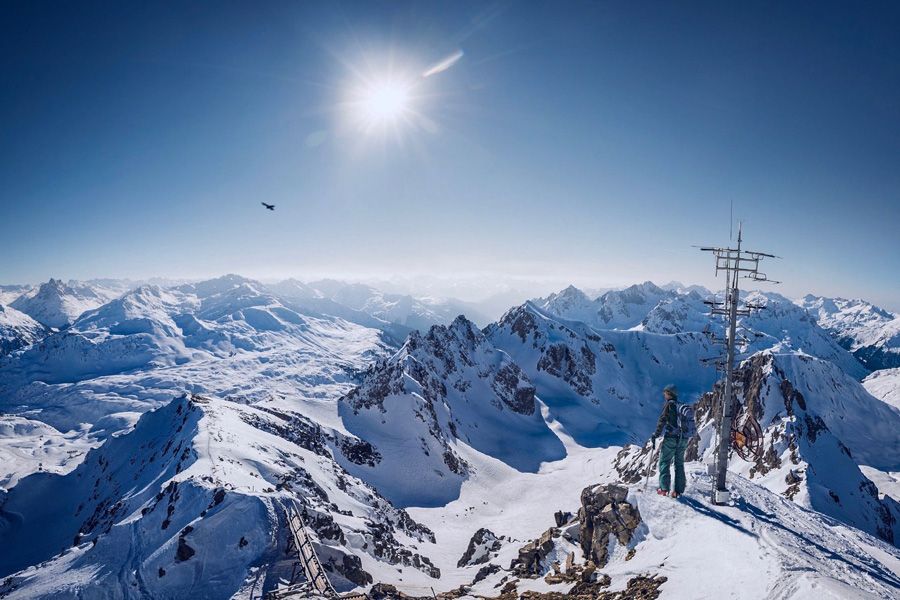
Best for: Classic Austrian après-ski
Ask seasoned skiers to name the best après ski destinations, and St. Anton comes up almost every time. The party starts on the mountain in mid-afternoon, and the two bars responsible sit within metres of each other on the run home.
MooserWirt, whose self-mocking slogan calls it “probably the worst ski hut on the Arlberg,” packs its terrace daily with live DJs, giant beer steins and a light show worthy of a festival, all kicking off around 3 pm sharp.
A short hop away is Krazy Kanguruh, an institution that's been keeping skiers out later than planned since 1965. It’s the oldest après bar in town, now owned by a double world champion and Olympic slalom gold medallist, Mario Matt. The venue was completely rebuilt in 2025 with a glass roof and a larger terrace, but thankfully didn't tame the atmosphere.
One warning: both bars sit partway up the piste, so the final run down to the village happens after the dancing. Choose your last drink wisely.
If you do decide to ski between après sessions, you're in luck. St. Anton is part of the Arlberg, Austria’s largest connected ski area, with over 300km of groomed runs shared with neighbouring resorts such as Lech, Zürs, Stuben and Warth.
As reward flights to ski resorts go, this one is hard to beat: an off-peak Economy return between London and Innsbruck costs 20,000 Avios plus £2 per person, and the transfer takes about 1 hour.
Why it works:
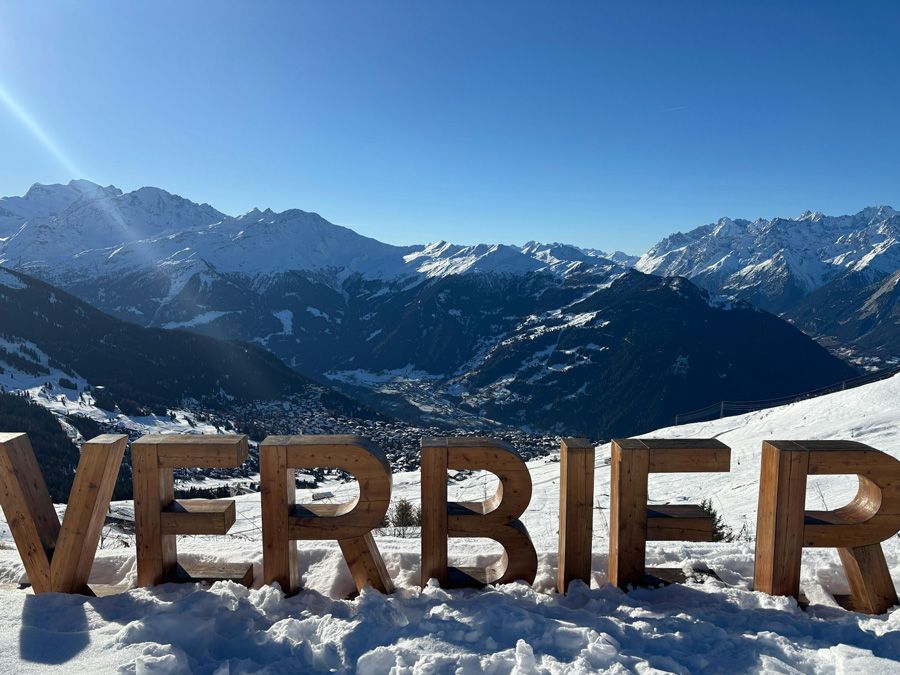
Best for: Luxury ski holidays
Verbier does après with a little polish. The Swiss resort attracts celebrities and serious skiers alike, and its evenings have a more refined vibe than those of the Austrian party towns, though no less committed.
You don't have to search hard for the action in Verbier. Everyone eventually ends up at Farinet, right on the Place Centrale, voted the best après ski bar in the world by Which?. Live bands play every evening of the season, bar dancing is described by the venue as compulsory, and a retractable roof opens whenever the sun cooperates.
Skiers who prefer a slower start head to Le Rouge’s piste-side terrace for rosé and house music before the night begins in earnest. Late nights belong to the Farm Club, a converted cowshed that has been the resort’s most famous institution since 1971 and still the place to be seen, with DJs playing until 4 am. Ski boots may be among the least comfortable footwear ever invented, yet people happily spend hours wearing them.
Last Updated: 27 Jul 2026
Holiday traditions evolve as we grow older. As kids, they revolve around sandcastles in summer or snowmen in winter. As adults, many of us swap those for weekends on the slopes. And once you've clicked out of your skis for the day, you'll discover that skiing is only half the experience.
Après-ski literally means “after skiing” in French, but the phrase has long outgrown its translation. What began as a wind-down after a day on the slopes is now a tradition in its own right, one that starts the moment the lifts close and carries on through mountain restaurants, live music, packed terraces and cosy Alpine lodges until dinner. Often well beyond it, too.
And the best part is that you don’t need to be a strong skier to enjoy any of this. Some of the happiest people in ski resorts never clip into a pair of skis. They spend the day at panoramic restaurants, spas, or people-watching from a mountainside terrace before joining everyone else for après. Nobody checks your piste count over a fondue.
If that sounds like your kind of ski holiday, the redemption prices are the icing on the cake. Reward flights to ski resorts are among the cheapest redemptions on the British Airways short-haul map, with several Alpine gateways costing just 20,000 Avios return in Economy. Avios ski holidays deserve a bigger reputation than they have.
Ask anyone, and they’ll say that there’s just something in the air. After hours on the slopes, nobody's in a rush to head back to the hotel.
Depending on the resort, après-ski can mean dancing in ski boots on an outdoor terrace with a DJ, sipping mulled wine beside a roaring fire, or lingering over a long lunch with snow-covered peaks filling every window. Calories don't count at altitude. At least, that's what everyone seems to agree.
Resorts such as St. Anton and Ischgl have turned après-ski into an institution, with terraces that fill long before the last skier reaches the bottom of the mountain. If you'd rather trade that for champagne, fondue, and mountain views in Verbier or Zermatt resorts, you're equally well served. That's the beauty of après-ski: there's no wrong way to do it.
Here are four of the best après-ski destinations in Europe, and how you can reach them with Avios.
Best for: High-altitude skiing
Val d’Isère is one of Europe’s best-known ski resorts, and the après scene is a huge part of the appeal. It has everything you'd expect from a world-class ski resort, but ask regulars what they remember most and many will say the afternoons rather than the mornings.
A mountain restaurant and bar high on the slopes called La Folie Douce is widely credited with putting après-ski on the map. Lunch starts off civilised enough. By mid-afternoon, the DJ has taken over, people are dancing on tables in ski boots, and someone inevitably orders a bottle of champagne. The good news is that if you've enthusiastically embraced the atmosphere, the gondola next door will carry you safely back to the village.
Made it back to the village? Congratulations. You're only halfway through the evening. The action continues back at a restaurant called Cocorico. Its snow-front terrace fills with live music every afternoon, and dancing in ski boots is practically compulsory.
If you're still going strong, head downstairs to Doudoune, the resort's nightclub, which stays open until 4 am. Everyone else can retreat to one of Val d'Isère's cosy hotel bars or restaurants and call it a very good day.
So, which airport is best for Val d’Isère? Chambéry is the closest main gateway, about 2 hours from the resort. Geneva is the furthest away, at around 3 hours, but the extra flights often make it a good option when Chambéry is fully booked. Lyon is a good compromise, with both the transfer time and flight options falling somewhere in the middle.
Our advice: search Chambéry first, keep Geneva as your backup, and book the transfer as soon as the flights are confirmed. An off-peak Economy return between London and Chambéry costs 20,000 Avios plus £2 per person, followed by a transfer of around 2 hours to the resort.
Why it works:
Best for: Classic Austrian après-ski
Ask seasoned skiers to name the best après ski destinations, and St. Anton comes up almost every time. The party starts on the mountain in mid-afternoon, and the two bars responsible sit within metres of each other on the run home.
MooserWirt, whose self-mocking slogan calls it “probably the worst ski hut on the Arlberg,” packs its terrace daily with live DJs, giant beer steins and a light show worthy of a festival, all kicking off around 3 pm sharp.
A short hop away is Krazy Kanguruh, an institution that's been keeping skiers out later than planned since 1965. It’s the oldest après bar in town, now owned by a double world champion and Olympic slalom gold medallist, Mario Matt. The venue was completely rebuilt in 2025 with a glass roof and a larger terrace, but thankfully didn't tame the atmosphere.
One warning: both bars sit partway up the piste, so the final run down to the village happens after the dancing. Choose your last drink wisely.
If you do decide to ski between après sessions, you're in luck. St. Anton is part of the Arlberg, Austria’s largest connected ski area, with over 300km of groomed runs shared with neighbouring resorts such as Lech, Zürs, Stuben and Warth.
As reward flights to ski resorts go, this one is hard to beat: an off-peak Economy return between London and Innsbruck costs 20,000 Avios plus £2 per person, and the transfer takes about 1 hour.
Why it works:
Best for: Luxury ski holidays
Verbier does après with a little polish. The Swiss resort attracts celebrities and serious skiers alike, and its evenings have a more refined vibe than those of the Austrian party towns, though no less committed.
You don't have to search hard for the action in Verbier. Everyone eventually ends up at Farinet, right on the Place Centrale, voted the best après ski bar in the world by Which?. Live bands play every evening of the season, bar dancing is described by the venue as compulsory, and a retractable roof opens whenever the sun cooperates.
Skiers who prefer a slower start head to Le Rouge’s piste-side terrace for rosé and house music before the night begins in earnest. Late nights belong to the Farm Club, a converted cowshed that has been the resort’s most famous institution since 1971 and still the place to be seen, with DJs playing until 4 am. Ski boots may be among the least comfortable footwear ever invented, yet people happily spend hours wearing them.
Verbier makes a strong case as one of the best ski resorts for nightlife, with comfort attached. The 4 Vallées area covers over 400km of runs and rises to 3,330 metres on the Mont Fort glacier, so the terrain is as serious as the party.
An off-peak Economy return between London and Geneva costs 20,000 Avios plus £2 per person, with a transfer of around 2 hours.
Why it works:
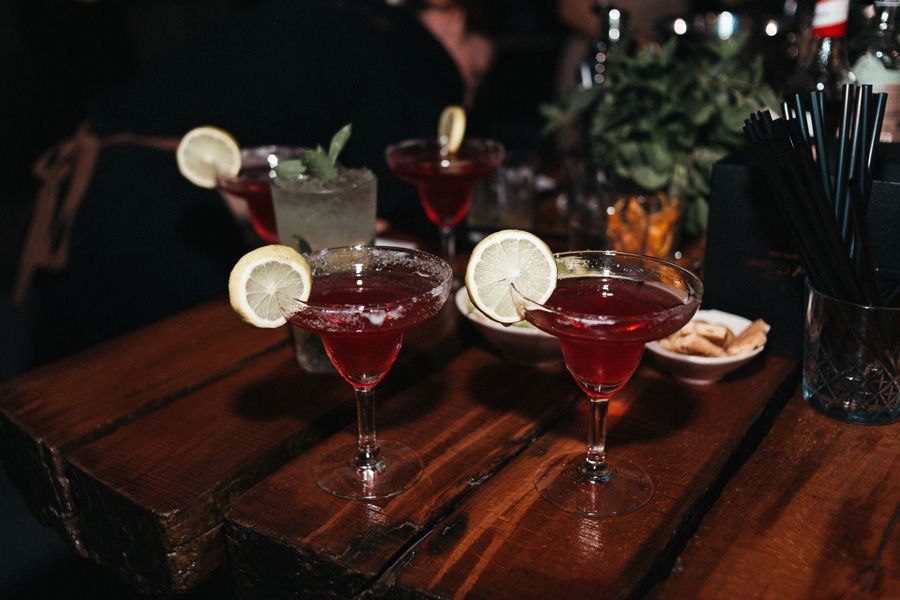
Best for: Music lovers and nightlife
No resort commits to the party quite like Ischgl. The Tyrolean village has spent three decades building a reputation as the festival capital of the Alps, thanks in no small part to its famous Top of the Mountain concert series. Elton John inaugurated the open-air stage on the 2,300-metre Idalp plateau back in 1994, and the headliners since read like a Glastonbury lineup: Rihanna, Bob Dylan, Tina Turner and Robbie Williams have all played at altitude, with Christina Aguilera closing the 2025/26 season. Best of all, your ski pass doubles as the concert ticket.
Ordinary days are hardly quiet either. The famous Kuhstall kicks off beside the Silvrettabahn at 3 pm daily, its dancefloor packed within a couple of hours. Trofana Alm brings a DJ and an exuberant crowd to a traditional hut setting, and if you’re still standing after that, the clubs keep the party going through the early hours. Ischgl sits near the top of any sensible ranking of the best ski resorts for nightlife, and it has the stamina to prove it.
The skiing is just as good as the après. Ischgl shares a huge ski area with neighbouring Switzerland, giving you 239km of high-altitude, snow-sure pistes. As a bonus, you can even ski to a duty-free shop before heading back down the mountain.
An off-peak Economy return between London and Innsbruck costs 20,000 Avios plus £2 per person, with a transfer of around 1 hour.
Why it works:
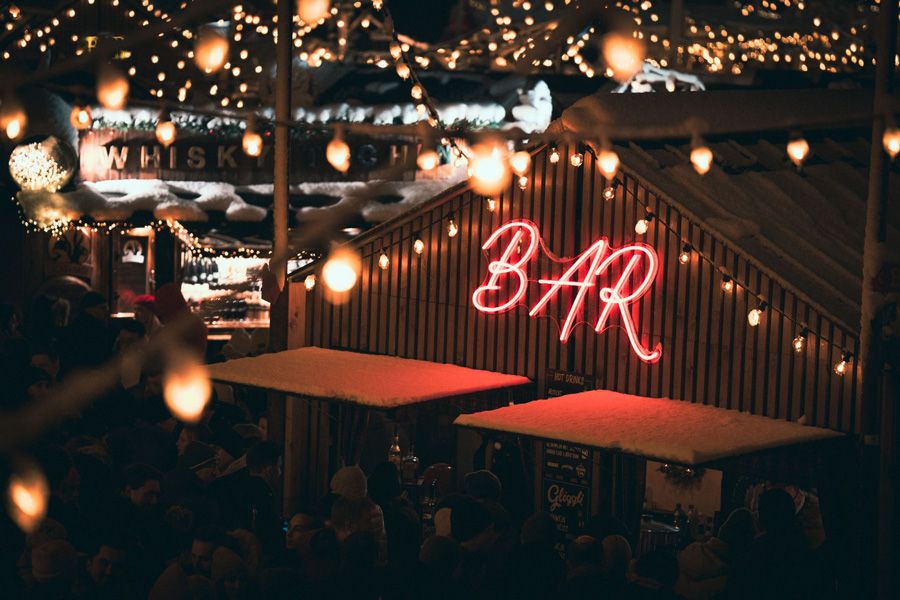
One of the best things about ski trips is that they don't require a six-figure Avios balance. A relatively modest balance is enough to get you into the Alps, and the value only gets better when cash fares spike during the winter holidays.
That is the real appeal of Avios ski holidays. An abstract point balance becomes a weekend in the Alps: a table danced on at 3 pm and a concert watched at 2,300 metres. Set your Alerts, book the transfers early and keep your ski boots handy. The mountain is waiting.
Verbier makes a strong case as one of the best ski resorts for nightlife, with comfort attached. The 4 Vallées area covers over 400km of runs and rises to 3,330 metres on the Mont Fort glacier, so the terrain is as serious as the party.
An off-peak Economy return between London and Geneva costs 20,000 Avios plus £2 per person, with a transfer of around 2 hours.
Why it works:
Best for: Music lovers and nightlife
No resort commits to the party quite like Ischgl. The Tyrolean village has spent three decades building a reputation as the festival capital of the Alps, thanks in no small part to its famous Top of the Mountain concert series. Elton John inaugurated the open-air stage on the 2,300-metre Idalp plateau back in 1994, and the headliners since read like a Glastonbury lineup: Rihanna, Bob Dylan, Tina Turner and Robbie Williams have all played at altitude, with Christina Aguilera closing the 2025/26 season. Best of all, your ski pass doubles as the concert ticket.
Ordinary days are hardly quiet either. The famous Kuhstall kicks off beside the Silvrettabahn at 3 pm daily, its dancefloor packed within a couple of hours. Trofana Alm brings a DJ and an exuberant crowd to a traditional hut setting, and if you’re still standing after that, the clubs keep the party going through the early hours. Ischgl sits near the top of any sensible ranking of the best ski resorts for nightlife, and it has the stamina to prove it.
The skiing is just as good as the après. Ischgl shares a huge ski area with neighbouring Switzerland, giving you 239km of high-altitude, snow-sure pistes. As a bonus, you can even ski to a duty-free shop before heading back down the mountain.
An off-peak Economy return between London and Innsbruck costs 20,000 Avios plus £2 per person, with a transfer of around 1 hour.
Why it works:
One of the best things about ski trips is that they don't require a six-figure Avios balance. A relatively modest balance is enough to get you into the Alps, and the value only gets better when cash fares spike during the winter holidays.
That is the real appeal of Avios ski holidays. An abstract point balance becomes a weekend in the Alps: a table danced on at 3 pm and a concert watched at 2,300 metres. Set your Alerts, book the transfers early and keep your ski boots handy. The mountain is waiting.