From skyline to summit: Exploring the magic of Monterrey with Avios
 Douglas
Search for pages and actions
Search for pages and actions
DouglasDouglas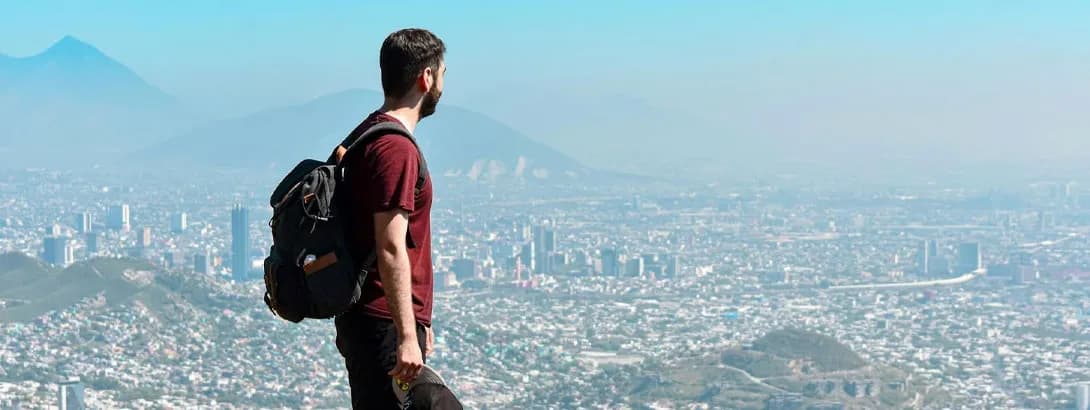
Last Updated: 06 Jul 2026
Mexico has always been the destination of choice for spring breakers and honeymooners. Most first-timers picture white-sand beaches, cenotes, and Mayan ruins before they go, but that familiar image just scratches the surface. It misses out on some truly extraordinary places, such as Monterrey, which is none of those things and so much more.
It sits in the country’s north, ringed by the Sierra Madre Oriental mountains, and runs on industry, civic pride, and some of the best grilled meat you'll eat anywhere. Travellers who go expecting a typical Mexican resort city always come back a little surprised by how much it grows on them.
And now there's a new reason to consider holidays to Mexico. Iberia has launched a direct service from Madrid to Monterrey, which gives UK travellers a great route to the region via Madrid, and one that works especially well with Iberia reward flights.
Last Updated: 06 Jul 2026
Mexico has always been the destination of choice for spring breakers and honeymooners. Most first-timers picture white-sand beaches, cenotes, and Mayan ruins before they go, but that familiar image just scratches the surface. It misses out on some truly extraordinary places, such as Monterrey, which is none of those things and so much more.
It sits in the country’s north, ringed by the Sierra Madre Oriental mountains, and runs on industry, civic pride, and some of the best grilled meat you'll eat anywhere. Travellers who go expecting a typical Mexican resort city always come back a little surprised by how much it grows on them.
And now there's a new reason to consider holidays to Mexico. Iberia has launched a direct service from Madrid to Monterrey, which gives UK travellers a great route to the region via Madrid, and one that works especially well with Iberia reward flights.
One question that often pops up in every traveller’s mind is “can you use Avios on Iberia flights?” Yes, you can. In fact, Iberia is often one of the better ways to spend them, especially to Latin America. The airline's surcharges are considerably lower than British Airways's, and its long-haul Business Class cabin features fully flat beds across its A330 and A350 fleet.
There's no direct flight from London to Monterrey. The route flies from London to Madrid and then to Monterrey, and the smart way to book it is as two separate tickets: a short-haul flight from the UK to Madrid, then an Iberia reward flight from Madrid to Monterrey.
Booking the Madrid leg separately avoids UK long-haul Air Passenger Duty, which from April 2026 stands at £253 per person in Business Class, a saving that more than justifies the extra booking step.
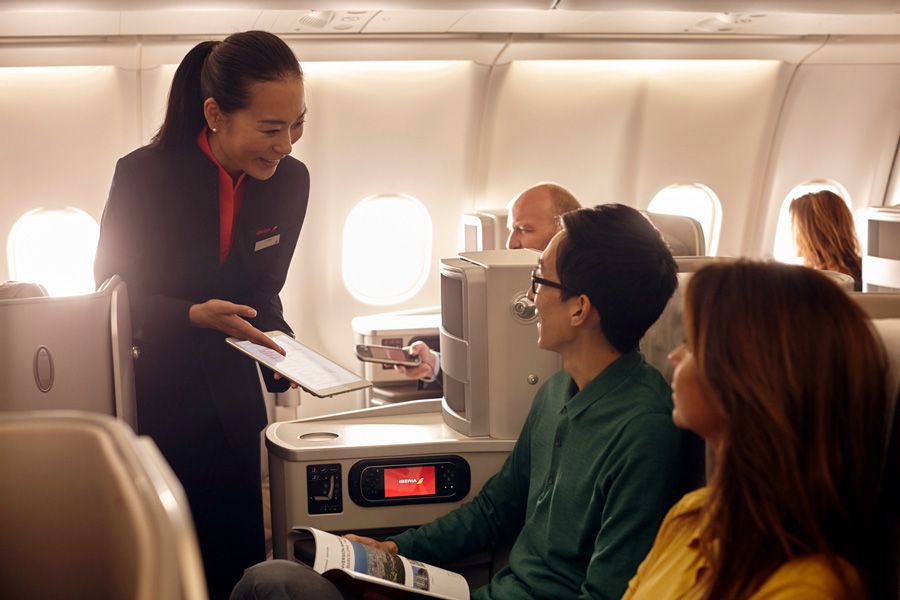
Here are the one-way Avios costs for each leg:
| Leg | Cabin | Avios (one way) |
| London to Madrid | Economy | 8,500 Avios |
| London to Madrid | Business | 17,000 Avios |
| Madrid to Monterrey | Economy | 17,000–25,500 Avios |
| Madrid to Monterrey | Business | 40,500 (off-peak)– 62,500 Avios (peak) |
Total one-way costs are roughly 25,000 to 35,000 Avios in Economy and 50,000 to 80,000 Avios in Business Class.
Taxes and fees on flying with Iberia from Madrid are considerably lower than equivalent BA redemptions from London. Expect a return of roughly £150 to £300 in Business Class, often significantly less.
A practical note: Avios reward seats on Iberia become bookable on the Iberia website 360 days before departure, which is five days earlier than on ba.com. If you're not using a BA Amex 2-4-1 Companion Voucher, your best chance of securing seats (especially in Business Class, where Iberia typically releases only two reward seats per flight) is to transfer your Avios to an Iberia Plus account and book directly at 360 days.
Monterrey has an identity problem in the best possible sense: it's so many things that placing it under just one category is almost impossible. For starters, Monterrey is Mexico's third-largest city and also its wealthiest, home to major multinationals and one of Latin America's leading universities, the Tecnológico de Monterrey.
You'd be forgiven for stepping out and thinking you're in the US. It looks more like a North American city than a traditional Mexican one, with its organised, well-connected infrastructure, and a skyline that changes every few years. It's only when you turn around and find yourself looking at mountains that rise so dramatically from the city's edge that the whole thing finally hits you.
For UK travellers asking “where can I use Avios points” for something different, Monterrey sits in a category of its own: a proper city trip, without the beach-resort feel, and with outdoor access that most urban destinations can't match.
Here why we think it should be at the top of your bucket list this year.
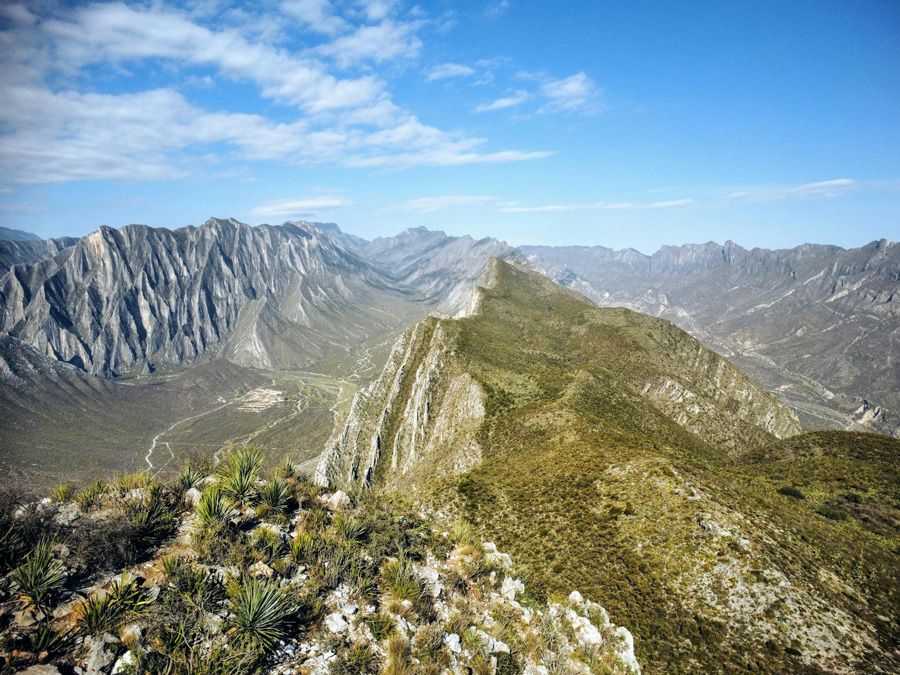
Cerro de la Silla, or the Saddle Mountain, is as much a part of Monterrey's identity as the Eiffel Tower is to Paris, except there's no waiting line and you can hike it whenever you want. It has a distinctive double-humped silhouette that sits on the city's eastern edge and appears on everything from murals to beer labels. The trail to the top takes around four to five hours and rewards you with a view of the entire metropolitan area laid out below, framed by the wider ranges of the Sierra Madre Oriental behind it.
If you’re not up for a full hike to the summit, there are easier ways to get a feel for the area’s landscape. Chipinque Ecological Park, perched in the foothills of the Parque Nacional Cumbres, is just 20 minutes from the city centre and more accessible and better suited to an afternoon than a full-day expedition. The park has well-marked trails through pine and oak forest, viewpoints over the city, and a decent chance of seeing deer, black bears, or coatis going about their business in the undergrowth. The trail network ranges from a 45-minute loop to longer routes into the park's higher sections.
The contrast between the urban core and these mountain trails is part of what makes Monterrey unusual. You're not driving two hours to reach nature. You're in the financial district in the morning, and on a mountain path by early afternoon.
If you're not ready to commit more than a day, here are a few options that bring home the magic of Monterrey in less than 24 hours.
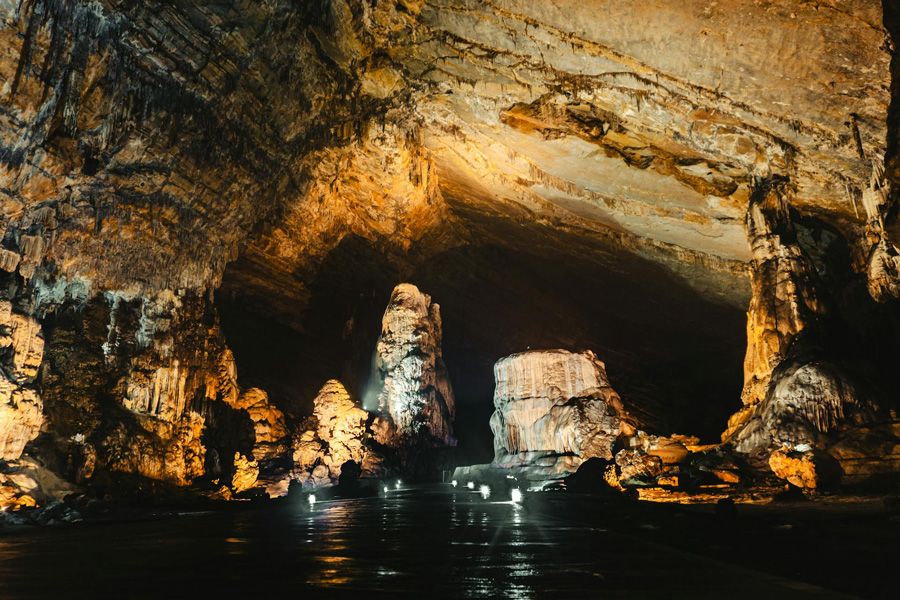
About 45 minutes northwest of the city, the Grutas de García are one of the strangest and most extraordinary natural sites in northern Mexico. The cave system stretches over three kilometres through 16 huge chambers, all carved from limestone that once sat under a prehistoric sea. Millions of years later, you can still spot marine fossils stuck in the walls, which is slightly surreal when you remember you’re standing in the mountains of northern Mexico and not at the bottom of the Atlantic Ocean.
There’s an aerial tramway to the entrance (currently closed for maintenance, so check before you go unless you fancy discovering that news at the bottom of a very steep hill). Otherwise, there’s a manageable uphill walk that gets you to the entrance. A guided tour runs through the illuminated chambers for around 90 minutes.
The Horsetail Waterfall, about an hour south of the city near the town of Santiago, drops around 25 metres into a pool at the bottom of a canyon. The name makes sense the second you see it. It actually does look like a giant horse flicking its tail down the mountainside.
It's a short hike from the car park, and the surrounding area has picnic spots, smaller cascades along the river, and plenty of places to sit around listening to rushing water while convincing yourself you should probably move to the mountains permanently.
The falls are at their most impressive in the rainy season (June to October), when the water comes crashing down with a lot more force and dramatically improves everyone’s holiday photos. Santiago itself is a Pueblo Mágico worth lingering in afterwards — a well-preserved colonial town with a good market and several restaurants serving northern Mexican food at local prices.
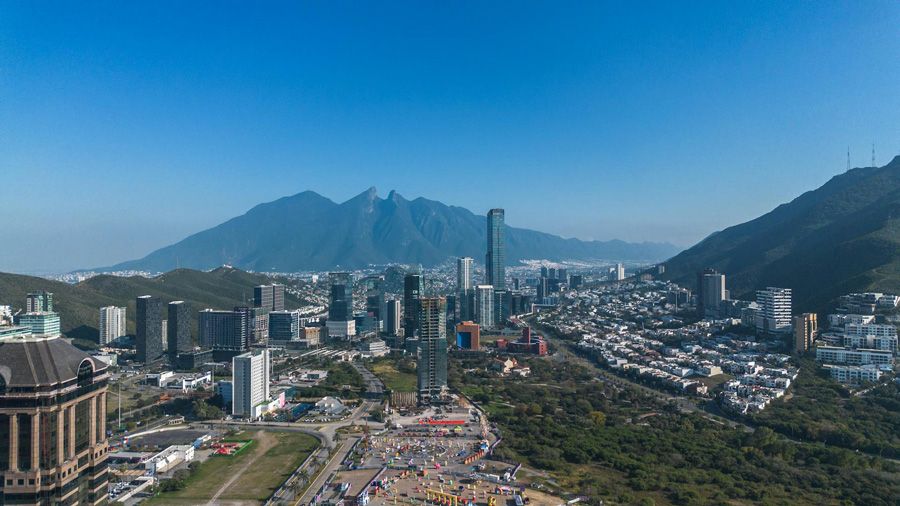
Monterrey's city centre runs along a spine from the Macroplaza to Parque Fundidora, and the walk between them covers most of the city’s main sights without forcing you into one of those exhausting “must-see everything in six hours” situations.
The Macroplaza itself is enormous, around 40 hectares in total, and one of the largest public squares in the world. At one end stands the Faro del Comercio, a giant 70-metre rust-red tower designed by Luis Barragán that shoots a green laser into the sky at night, and the Metropolitan Cathedral sits at the other end.
From the Macroplaza, the Santa Lucía Riverwalk connects the centre to Parque Fundidora via a 2.5-kilometre pedestrian canal. You can walk it, take a pedal boat, or join one of the guided canal cruises. The path is lit and busy at night; cultural events run here regularly, and the backdrop of the mountains makes the whole thing feel dramatic.
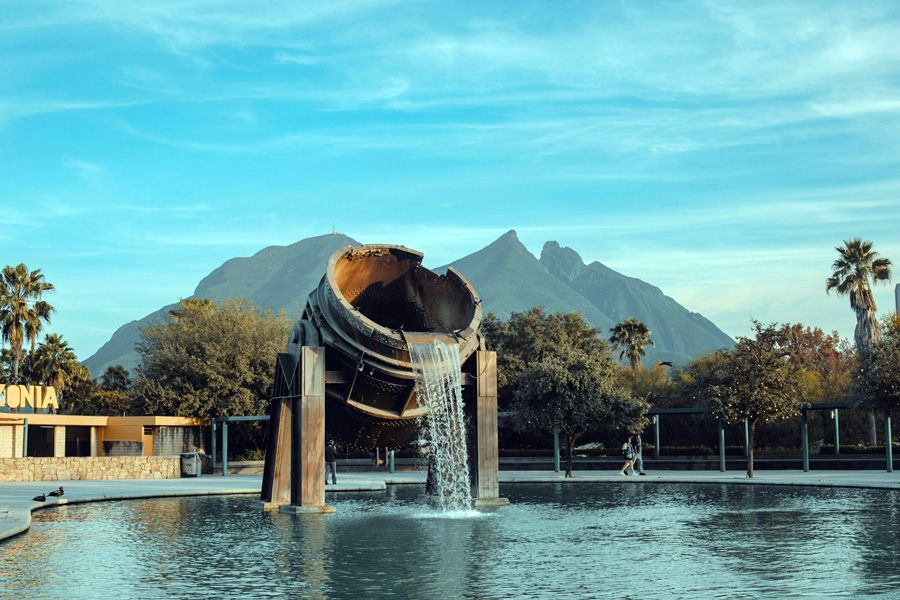
At the far end sits Parque Fundidora, built on the site of a former steel foundry. The industrial bones are still there, but the furnaces have been converted into an interactive museum about Monterrey's industrial history, which is more interesting than it sounds. The rest of the park has bike rental, a children's area, and space to spread out.
Monterrey's historic quarter is the place to be after dark. During the day, the colonial streets, independent cafés, and the Sunday Corredor del Arte (when Calle Mina closes to traffic and becomes an outdoor market of antiques, crafts, and second-hand finds) give it a relaxed energy. At night, the bars and music venues take over. It's primarily a local scene rather than a tourist one, which is most of the appeal.
The Museo de Arte Contemporáneo de Monterrey is one of Mexico's better contemporary art spaces, housed in a 1990s building designed around a large central sculpture of a dove by Juan Soriano. The permanent collection covers Latin American art from the mid-20th century onward; temporary exhibitions bring in international names. Entry is free on Sundays.
Monterrey takes its food seriously, and its food is serious about meat. The city sits in the cattle country of northern Mexico, and carne asada. So pack an appetite and be ready for plenty of grilled beef, usually skirt or flank, eaten with fresh tortillas and roasted spring onions.

Cabrito (roasted baby goat) is another regional signature dish. It's slow-roasted whole, served in portions, and has a flavour that's somewhere between lamb and pork. The better steakhouses in Monterrey serve it alongside serious cuts of beef, and a meal at one of the city's established parrillas is worth budgeting for.
Beyond the meat:
The restaurant scene has developed fast, especially around the San Pedro Garza García district, just southwest of the city centre, which has a dense cluster of well-reviewed restaurants across Mexican, Japanese, and contemporary Latin American cooking. The dangerous part is the pricing. You’ll sit down expecting London-level damage to your bank account, then end up ordering a lot more food than you meant to because everything feels so affordable.
Monterrey's climate is hot for most of the year. Summers (June to August) are genuinely extreme; temperatures regularly exceed 40°C, and the city's concrete amplifies it. Most visitors prefer autumn (September to November) or spring (March to May), when daytime temperatures range from 20 to 30°C and the air is clearer.
Find available reward seats with British Airways and Iberia.

Winter (December to February) is mild by UK standards, with temperatures hovering between 15 and 20°C during the day. This is the peak season for domestic tourism, especially around Christmas and Easter. Prices and crowds both increase during these windows.
The rainy season runs from June to October; rainfall is usually in the form of afternoon thunderstorms rather than all-day rain, and the surrounding vegetation is at its greenest during this period.
We recommend visiting in October and November for the best combination of bearable temperatures, post-rain greenery, and fewer crowds than the Christmas peak, especially if you’re looking for outdoor activities such as hiking Cerro de la Silla, visiting Chipinque, and day trips to the waterfalls.
This is one of the more interesting new openings for Iberia reward flights in recent years. Flying with Iberia to Latin America via Madrid consistently offers better Avios value than the equivalent BA redemptions from London, leading to lower Avios costs, lower carrier surcharges, and a long-haul fleet with fully flat beds in Business Class.
A few things worth knowing before you book:
Check Reward Flight Finder (RFF). Use RFF to see a full year of availability across dates without searching one flight at a time. Set an Alert if your preferred dates aren't showing reward seats yet.
One question that often pops up in every traveller’s mind is “can you use Avios on Iberia flights?” Yes, you can. In fact, Iberia is often one of the better ways to spend them, especially to Latin America. The airline's surcharges are considerably lower than British Airways's, and its long-haul Business Class cabin features fully flat beds across its A330 and A350 fleet.
There's no direct flight from London to Monterrey. The route flies from London to Madrid and then to Monterrey, and the smart way to book it is as two separate tickets: a short-haul flight from the UK to Madrid, then an Iberia reward flight from Madrid to Monterrey.
Booking the Madrid leg separately avoids UK long-haul Air Passenger Duty, which from April 2026 stands at £253 per person in Business Class, a saving that more than justifies the extra booking step.
Here are the one-way Avios costs for each leg:
| Leg | Cabin | Avios (one way) |
| London to Madrid | Economy | 8,500 Avios |
| London to Madrid | Business | 17,000 Avios |
| Madrid to Monterrey | Economy | 17,000–25,500 Avios |
| Madrid to Monterrey | Business | 40,500 (off-peak)– 62,500 Avios (peak) |
Total one-way costs are roughly 25,000 to 35,000 Avios in Economy and 50,000 to 80,000 Avios in Business Class.
Taxes and fees on flying with Iberia from Madrid are considerably lower than equivalent BA redemptions from London. Expect a return of roughly £150 to £300 in Business Class, often significantly less.
A practical note: Avios reward seats on Iberia become bookable on the Iberia website 360 days before departure, which is five days earlier than on ba.com. If you're not using a BA Amex 2-4-1 Companion Voucher, your best chance of securing seats (especially in Business Class, where Iberia typically releases only two reward seats per flight) is to transfer your Avios to an Iberia Plus account and book directly at 360 days.
Monterrey has an identity problem in the best possible sense: it's so many things that placing it under just one category is almost impossible. For starters, Monterrey is Mexico's third-largest city and also its wealthiest, home to major multinationals and one of Latin America's leading universities, the Tecnológico de Monterrey.
You'd be forgiven for stepping out and thinking you're in the US. It looks more like a North American city than a traditional Mexican one, with its organised, well-connected infrastructure, and a skyline that changes every few years. It's only when you turn around and find yourself looking at mountains that rise so dramatically from the city's edge that the whole thing finally hits you.
For UK travellers asking “where can I use Avios points” for something different, Monterrey sits in a category of its own: a proper city trip, without the beach-resort feel, and with outdoor access that most urban destinations can't match.
Here why we think it should be at the top of your bucket list this year.
Cerro de la Silla, or the Saddle Mountain, is as much a part of Monterrey's identity as the Eiffel Tower is to Paris, except there's no waiting line and you can hike it whenever you want. It has a distinctive double-humped silhouette that sits on the city's eastern edge and appears on everything from murals to beer labels. The trail to the top takes around four to five hours and rewards you with a view of the entire metropolitan area laid out below, framed by the wider ranges of the Sierra Madre Oriental behind it.
If you’re not up for a full hike to the summit, there are easier ways to get a feel for the area’s landscape. Chipinque Ecological Park, perched in the foothills of the Parque Nacional Cumbres, is just 20 minutes from the city centre and more accessible and better suited to an afternoon than a full-day expedition. The park has well-marked trails through pine and oak forest, viewpoints over the city, and a decent chance of seeing deer, black bears, or coatis going about their business in the undergrowth. The trail network ranges from a 45-minute loop to longer routes into the park's higher sections.
The contrast between the urban core and these mountain trails is part of what makes Monterrey unusual. You're not driving two hours to reach nature. You're in the financial district in the morning, and on a mountain path by early afternoon.
If you're not ready to commit more than a day, here are a few options that bring home the magic of Monterrey in less than 24 hours.
About 45 minutes northwest of the city, the Grutas de García are one of the strangest and most extraordinary natural sites in northern Mexico. The cave system stretches over three kilometres through 16 huge chambers, all carved from limestone that once sat under a prehistoric sea. Millions of years later, you can still spot marine fossils stuck in the walls, which is slightly surreal when you remember you’re standing in the mountains of northern Mexico and not at the bottom of the Atlantic Ocean.
There’s an aerial tramway to the entrance (currently closed for maintenance, so check before you go unless you fancy discovering that news at the bottom of a very steep hill). Otherwise, there’s a manageable uphill walk that gets you to the entrance. A guided tour runs through the illuminated chambers for around 90 minutes.
The Horsetail Waterfall, about an hour south of the city near the town of Santiago, drops around 25 metres into a pool at the bottom of a canyon. The name makes sense the second you see it. It actually does look like a giant horse flicking its tail down the mountainside.
It's a short hike from the car park, and the surrounding area has picnic spots, smaller cascades along the river, and plenty of places to sit around listening to rushing water while convincing yourself you should probably move to the mountains permanently.
The falls are at their most impressive in the rainy season (June to October), when the water comes crashing down with a lot more force and dramatically improves everyone’s holiday photos. Santiago itself is a Pueblo Mágico worth lingering in afterwards — a well-preserved colonial town with a good market and several restaurants serving northern Mexican food at local prices.
Monterrey's city centre runs along a spine from the Macroplaza to Parque Fundidora, and the walk between them covers most of the city’s main sights without forcing you into one of those exhausting “must-see everything in six hours” situations.
The Macroplaza itself is enormous, around 40 hectares in total, and one of the largest public squares in the world. At one end stands the Faro del Comercio, a giant 70-metre rust-red tower designed by Luis Barragán that shoots a green laser into the sky at night, and the Metropolitan Cathedral sits at the other end.
From the Macroplaza, the Santa Lucía Riverwalk connects the centre to Parque Fundidora via a 2.5-kilometre pedestrian canal. You can walk it, take a pedal boat, or join one of the guided canal cruises. The path is lit and busy at night; cultural events run here regularly, and the backdrop of the mountains makes the whole thing feel dramatic.
At the far end sits Parque Fundidora, built on the site of a former steel foundry. The industrial bones are still there, but the furnaces have been converted into an interactive museum about Monterrey's industrial history, which is more interesting than it sounds. The rest of the park has bike rental, a children's area, and space to spread out.
Monterrey's historic quarter is the place to be after dark. During the day, the colonial streets, independent cafés, and the Sunday Corredor del Arte (when Calle Mina closes to traffic and becomes an outdoor market of antiques, crafts, and second-hand finds) give it a relaxed energy. At night, the bars and music venues take over. It's primarily a local scene rather than a tourist one, which is most of the appeal.
The Museo de Arte Contemporáneo de Monterrey is one of Mexico's better contemporary art spaces, housed in a 1990s building designed around a large central sculpture of a dove by Juan Soriano. The permanent collection covers Latin American art from the mid-20th century onward; temporary exhibitions bring in international names. Entry is free on Sundays.
Monterrey takes its food seriously, and its food is serious about meat. The city sits in the cattle country of northern Mexico, and carne asada. So pack an appetite and be ready for plenty of grilled beef, usually skirt or flank, eaten with fresh tortillas and roasted spring onions.
Cabrito (roasted baby goat) is another regional signature dish. It's slow-roasted whole, served in portions, and has a flavour that's somewhere between lamb and pork. The better steakhouses in Monterrey serve it alongside serious cuts of beef, and a meal at one of the city's established parrillas is worth budgeting for.
Beyond the meat:
The restaurant scene has developed fast, especially around the San Pedro Garza García district, just southwest of the city centre, which has a dense cluster of well-reviewed restaurants across Mexican, Japanese, and contemporary Latin American cooking. The dangerous part is the pricing. You’ll sit down expecting London-level damage to your bank account, then end up ordering a lot more food than you meant to because everything feels so affordable.
Monterrey's climate is hot for most of the year. Summers (June to August) are genuinely extreme; temperatures regularly exceed 40°C, and the city's concrete amplifies it. Most visitors prefer autumn (September to November) or spring (March to May), when daytime temperatures range from 20 to 30°C and the air is clearer.
Find available reward seats with British Airways and Iberia.
Winter (December to February) is mild by UK standards, with temperatures hovering between 15 and 20°C during the day. This is the peak season for domestic tourism, especially around Christmas and Easter. Prices and crowds both increase during these windows.
The rainy season runs from June to October; rainfall is usually in the form of afternoon thunderstorms rather than all-day rain, and the surrounding vegetation is at its greenest during this period.
We recommend visiting in October and November for the best combination of bearable temperatures, post-rain greenery, and fewer crowds than the Christmas peak, especially if you’re looking for outdoor activities such as hiking Cerro de la Silla, visiting Chipinque, and day trips to the waterfalls.
This is one of the more interesting new openings for Iberia reward flights in recent years. Flying with Iberia to Latin America via Madrid consistently offers better Avios value than the equivalent BA redemptions from London, leading to lower Avios costs, lower carrier surcharges, and a long-haul fleet with fully flat beds in Business Class.
A few things worth knowing before you book:
Check Reward Flight Finder (RFF). Use RFF to see a full year of availability across dates without searching one flight at a time. Set an Alert if your preferred dates aren't showing reward seats yet.