
British Airways Business Class (Club World) has long been one of the most coveted redemptions in the Avios ecosystem. Upgrades sell out fast, premium reward seats vanish without warning, and couples trying to travel up front can fail before they begin.
While one traveller is planning a honeymoon to the Maldives, another is refreshing Tokyo for cherry blossom season, and someone else is quietly hunting Cape Town for next winter. What most collectors never see, however, is the invisible competition: where other travellers are searching, which destinations push them to set alerts, and the routes that provoke the most “book now” behaviour.
Between 1 January and 30 April 2025, Reward Flight Finder (RFF) analysed platform activity to track how UK travellers chase Business Class redemptions from London. The analysis looks not at theoretical availability, but at what people actually do when they’re serious about securing a seat at the front of the cabin.
Specifically, RFF examined five core data signals:
- Business Class searches on Availability Calendar and Worldwide Map – where collectors are actively checking routes and dates.
- Business Class alerts created – the point at which manual hunting turns into “keep watching this for me.”
- Booking intent – signalling concrete booking intent or deeper research into fares, upgrades or mixed-cabin options.
- Multi-passenger Business searches (passenger-count weighted) – showing where travellers are searching for 2+ Business seats on the same trip, revealing couples’ and families’ true booking intent (not just single-seat hunting).
- When people search – highlighting that over a third of Business Class search activity happens between 6pm and midnight, with a clear peak on Sunday evenings as leisure planners, families and Companion Voucher users go hunting for seats.
Taken together, these signals give a clear read on how UK collectors actually hunted BA Business seats between 1 January and 30 April 2025.
The Routes That Get Hunted the Hardest
The first step in understanding how travellers chase Business Class rewards is to look at where demand actually concentrates. Not every long-haul route attracts the same level of attention; some destinations absorb a huge share of reward flight searches, alert creations and BA booking intent, while others barely register.
When Avios collectors decide they must fly up front, their behaviour clusters sharply around a small group of routes.
Top Routes by Business Demand Score — Searches + Alerts
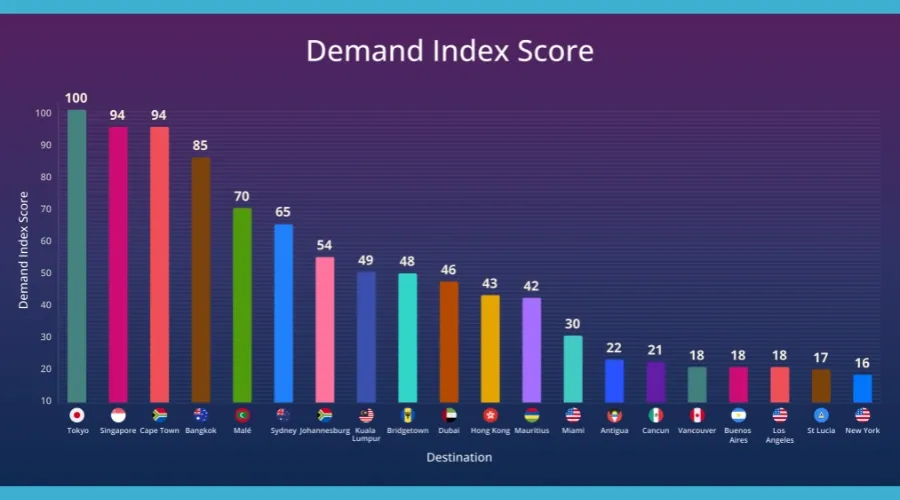
Tokyo, Singapore, Cape Town and Bangkok sit at the top of the index, reflecting high frequency long-haul interest and aspirational itineraries. But demand is not spread evenly: a small group of routes absorbs a disproportionate share of attention. Other destinations still see activity, but nothing like the intensity on these top lanes.
Key takeaway
Manual searching of high-demand routes is likely not to succeed. Setting alerts months ahead with a tool that does automatic, frequent searching will give a much better chance of success. RFF is such a tool.
When to Set Alerts
- When the flight schedule opens (about 355 days before departure / “T-355”) — this is when the first reward seats are usually released.
- In the last two weeks before departure (about 14 to 2 days before / “T-14 to T-2”) — this is when extra seats can appear at short notice.
Which Alert Type to Use
- Day-by-Day alerts: watch a date range and flag which days have reward seats. Silver members get daily checks, while Gold members get instant alerts when availability appears.
- Flight-by-Flight alerts: watch specific flights for last-minute seat releases.
Start here: Pricing & Plans and Flight-by-Flight.
BA guarantees a minimum number of reward seats on every flight— 8 Economy, 2 Premium Economy, 4 Business — and a smaller guarantee from London City. Seats load when schedules open and at occasional top-ups, so Alerts matter.
Couples, Families & Solo Travellers: Who Chases What?
Ask any Avios collector what really hurts and it usually isn’t taxes or surcharges – it’s trying to get more than one Business Class seat on the same flight. Booking a single flat-bed in Club World is already a hunt; booking two, three or even four together becomes a tactical sport.
RFF's passenger-count data splits that story three ways: solo travellers, couples, and groups or families (3+ passengers). Once you separate those segments, the map of BA Business demand looks very different.
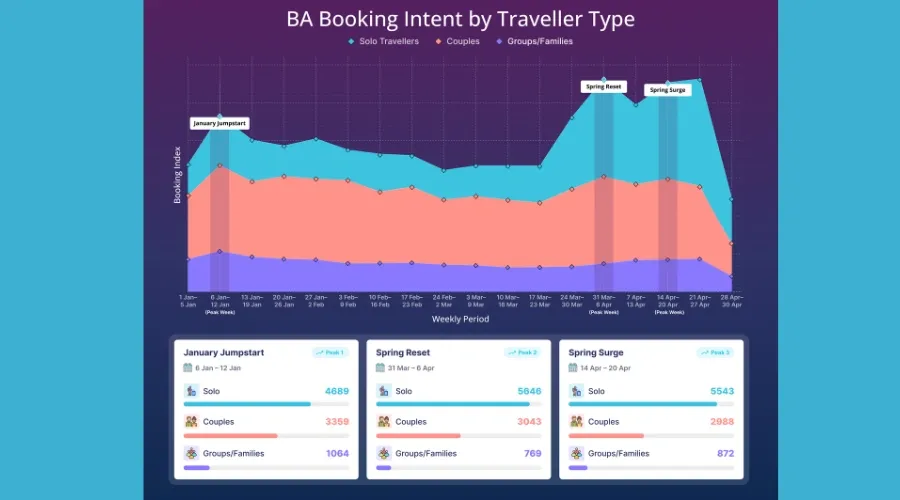
Across the January–April 2025 period, three distinct booking personas emerge:
- Solo travellers dominate the Business Class hunt. They chase single seats aggressively on premium long-haul routes, often with little flexibility to wait.
- Couples take a slower game, tracking seats across date ranges, particularly on leisure-driven redemptions where travelling together is non-negotiable.
- Groups and families face the steepest odds, rarely booking impulsively, relying heavily on alerts to compete for extremely scarce multi-seat drops.
As the line chart shows, solo demand spikes dramatically whenever availability improves, even briefly. Couples follow the same pattern but with calmer, steadier behaviour, and the most surprising trend comes from families and groups: although they represent the smallest share, their intent barely drops at any point. When three or more seats are needed, travellers don’t quit the hunt—they automate it.
Where Each Group Wants to Fly
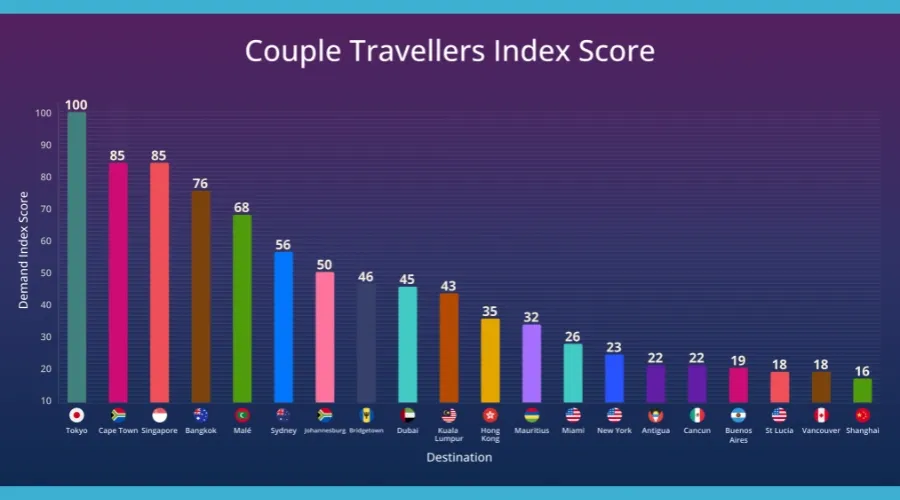
Couples: Big-Ticket Leisure & Bucket-List Routes. RFF’s two-passenger Business Class demand puts Tokyo at the top, followed closely by Cape Town, Singapore, Bangkok and Malé (Maldives). These are “big trip” lanes — honeymoons, milestone anniversaries and long-awaited adventures. Lower down the list sit Sydney, Bridgetown, Mauritius, Miami and New York, where flying up front adds emotional value to long escapes.
Groups and families tell a slightly different story. When RFF looks at Business booking intent for 3 or more passengers, Dubai suddenly jumps to the top, with Tokyo, Malé, Bangkok, Cape Town and Singapore still strongly represented but joined by family-friendly hotspots such as Orlando, Miami, Bridgetown and Cancún. These are the trips where parents are trying to get everyone up front – or at least test the water to see if it’s possible.
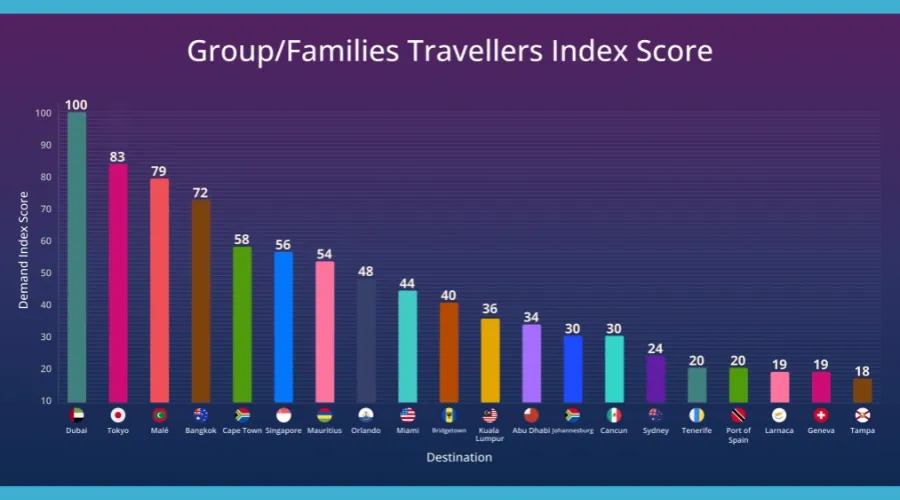
Solo travellers behave differently again. On the one-passenger view, Singapore leads the chart, followed by Tokyo, Cape Town and Sydney, with New York and Dubai not far behind. This is the classic blend of corporate corridors and high-value leisure trips: people travelling alone, often on tight dates, hammering the Availability Calendar and Worldwide Map to see if a single flat bed appears. Routes like Hong Kong, Kuala Lumpur, Miami, Vancouver and Johannesburg fill out the solo top-tier, underlining how much of BA’s Business inventory is chased one seat at a time.
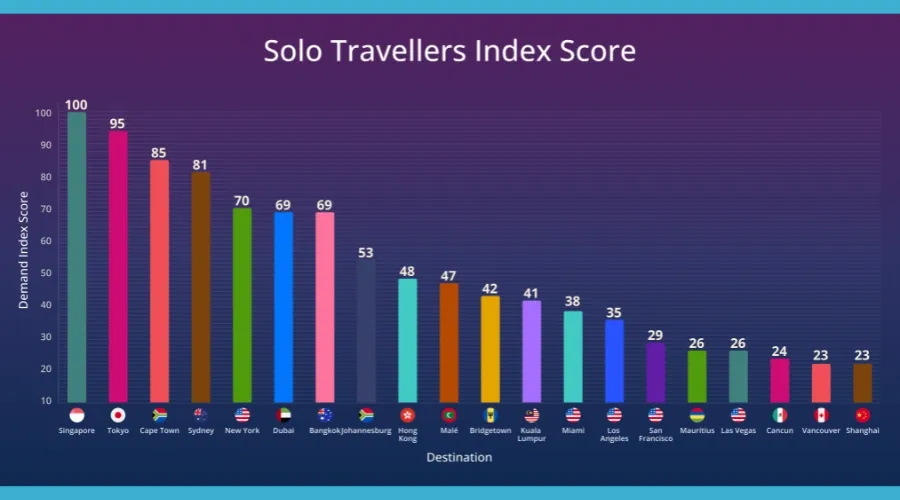
Put together, the three charts show a simple pattern:
- Solo travellers dominate Business Class hunting on mixed business–leisure routes such as Singapore, New York and Dubai.
- Couples concentrate their effort on big-ticket leisure lanes – Tokyo, Cape Town, Singapore, Bangkok, Malé – where two seats together can make or break the trip.
- Groups and families skew towards sunshine and theme-park routes – Dubai, Malé, Orlando, Miami, Bridgetown, Cancún – and are far more likely to stay stuck in the search phase because 3–4 seat drops are so rare.
| Traveller Type | Behaviour | Routes |
|---|---|---|
| Solo | Fast, impulsive, refresh hunters | Singapore, New York, Dubai |
| Couples | Tactical, alert-reliant, milestone trips | Tokyo, Cape Town, Bangkok |
| Groups/Families | Slow, persistent, alert-dependent | Dubai, Orlando, Cancún |
How Avios Collectors Can Use This
For solo travellers
- Take advantage of how much easier it is to place a single seat: keep alerts tight to the dates and routes you actually care about, rather than casting an overly wide net.
- On high-demand routes such as Singapore, New York, Dubai and Tokyo, consider Instant or hourly alerts so you can move quickly when a lone seat appears.
- If you hold a BA Companion Voucher that can be used as a solo Avios discount, think of RFF as the “scouting layer” for that voucher. Use alerts to focus on premium routes where a single discounted Business seat makes the biggest difference in value, instead of burning it on short-haul redemptions.
- For Gold members, the real power comes from combining Flight-by-Flight alerts with the BA Club Suite Filter. If you care about a specific departure—such as a popular overnight flight that lets you sleep onboard—set Flight-by-Flight alerts for that exact rotation. Filter the same alerts to show only BA Club Suite aircraft. Every alert you receive will be for the right cabin and the exact flight you actually want to book with your Companion Voucher.
For couples
This might seem obvious, but you’d be surprised how many people forget: set alerts for two passengers, not one. Otherwise you will see availability drops that you cannot actually use together. This is especially important when you plan to redeem a BA Companion Voucher for two Business Class seats on the same flight.
- On busy long-haul routes like Tokyo, Cape Town, Singapore, Bangkok or Malé, don’t Search for just one exact date. Give yourself a one-day cushion on either side. RFF's data shows that moving your Search by even 24 hours is often the difference between simply seeing a Business Class seat drop and actually being able to book it — especially when you’re using a BA Companion Voucher and want a specific cabin like Club World or BA Club Suite.
- For couples aiming specifically for BA’s newest product, Gold members can use the BA Club Suite Filter so that both searches and alerts are narrowed to flights offering BA Club Suite. Paired with Flight-by-Flight alerts, this lets you track the exact departures most likely to release two BA Club Suite seats together, and line that up with Companion Voucher availability, instead of waiting for the “perfect” flight to appear by chance.
For families and groups
- Treat three- and four-seat Business Class drops as rare events. On routes like Dubai, Malé, Orlando and similar sunshine or theme-park destinations, alerts move from “nice to have” to essential if you are hoping to get multiple people into the same cabin. Set alerts 11 months ahead to even have a chance.
- Keep a back-up Premium Economy alert in play, or be willing to mix cabins, as this aligns far more closely with how BA actually releases reward seats than hoping for four flat beds to appear on the same flight. Even where a Companion Voucher is involved, it is often more realistic to get two people into Business and the rest into a lower cabin than to insist on four identical seats.
- Approach high-demand family routes such as Dubai, Orlando, Bridgetown, Cancún and Miami with a realistic expectation that 3–4 seats together will be scarce and disappear quickly when they do appear. Alerts give you a fighting chance of seeing those opportunities while they still exist.
The Underlying Message
It’s clear that BA Business Class behaves differently depending on who you travel with. Solo travellers sprint; couples tend to strategise; families and groups persist over a longer period. The BA Companion Voucher adds another layer: it amplifies the value of a well-timed Business redemption, but only if you can actually find the seats.
RFF's data suggests that the people who come out ahead are rarely the ones endlessly refreshing a calendar at two in the morning, but those who let alerts do the work quietly in the background, align their voucher strategy with the routes they are really chasing, and wait for the system to blink first.
When the Hunt Happens: Avios Collectors Have a Clock
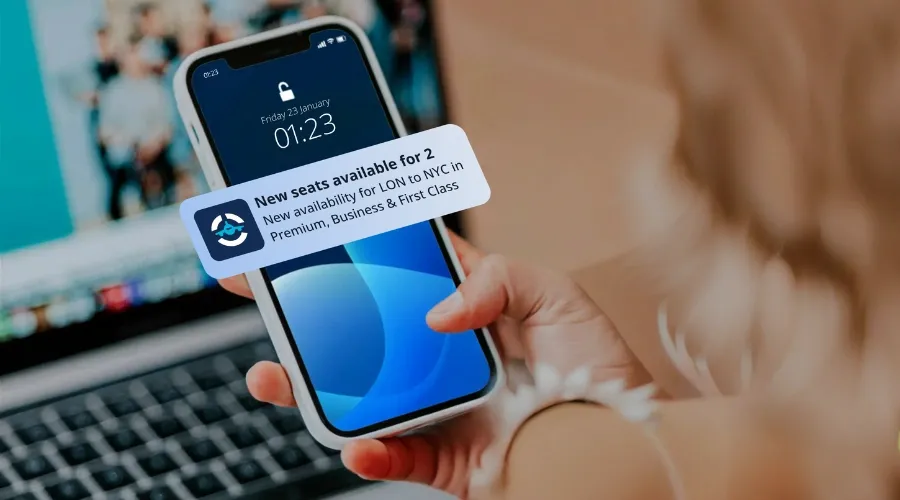
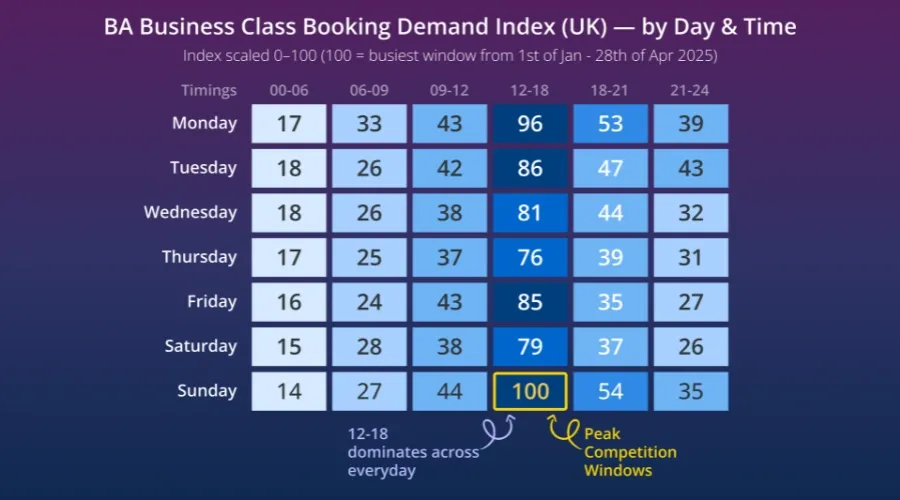
RFF's timestamp analysis shows that the battle for Business Class seats doesn’t happen at desks on weekday mornings — it happens after hours, when travellers are planning from home. Over a third of all Business Class searches take place between 6pm and midnight, with Sunday evenings emerging as the most intense peak of the entire week.
This pattern is driven largely by leisure planning behaviour: couples organising long-haul trips, families trying to upgrade, and Companion Voucher users searching together. Weekday working hours remain important, but the real fight starts once laptops close and dinner plates clear.
The Business Class Seat Race Happens at Night and Peaks on Sundays
How RFF Turns Peak Demand Into a Booking Advantage
The heatmap shows that booking competition isn’t evenly spread — it builds. Intent rises steadily from late morning, intensifies through the afternoon, and peaks between 15:00 and 21:00, with Sunday evening standing out as the most competitive window of the week. Overnight (00–06) remains consistently quiet, while early mornings are calmer but active enough for planning and setup.
Seat releases may be unpredictable, but user behaviour isn’t. By mid-afternoon, demand is already high, and by early evening the race is on. That’s where RFF gives you an edge. Instead of joining the rush and manually refreshing, RFF monitors availability continuously and alerts you the instant seats match your criteria.
In peak windows, speed matters, not because you can predict when seats will drop, but because you’re ready to act the moment they do.
Use quiet hours for setup. Let alerts win when competition peaks.
The smartest pattern is simple:
- 00–09: set up calmly — build alerts, test routes, add alternates, and refine passenger details while competition is lowest.
- 09–12: fine-tune — compare options, adjust alerts, and lock in priority routes as intent starts to rise.
- 12–15: be ready — demand accelerates, so alerts should already be live and decisions pre-made.
- 15–21: move fast — this is peak competition, where alerts matter most and hesitation costs seats.
You don’t need to guess when seats will appear. You just need to be prepared before everyone else is watching.
Flight-by-Flight Tracking
High-demand periods create a lot of “noise” — people searching broad date ranges and whole routes. Flight-by-Flight alerts cut through it by tracking specific BA flight numbers, so when the right departure opens up, you’re notified without having to scan.
BA Club Suite Filter
If your aim is BA Club Suite specifically, filtering alerts to BA Club Suite-equipped flights removes false positives. That’s especially useful in high-competition windows, when wasting minutes on the wrong aircraft can cost you the seat.
Smart Airport Alternates
Demand spikes often cluster around a single airport, but availability doesn’t always behave the same across alternates. Adding options like LHR vs LGW or JFK vs EWR can surface seats that the crowd misses — and alerts make that practical without multiplying your manual workload.
Two-Passenger (and Multi-Passenger) Alerts
This is where many bookings fail. Couples often search as if they only need one seat, then discover the “availability” they saw can’t be used together. If you need two seats, set alerts for two passengers. If you need three or four, treat it as a rare-event hunt and lean even harder on automation — multi-seat drops are scarce and disappear quickly when they happen.
Bottom line: the heatmap shows when the crowd is loudest. RFF helps you avoid competing in that noise — and turns the booking race into a single moment: when your alert fires.
About RFF
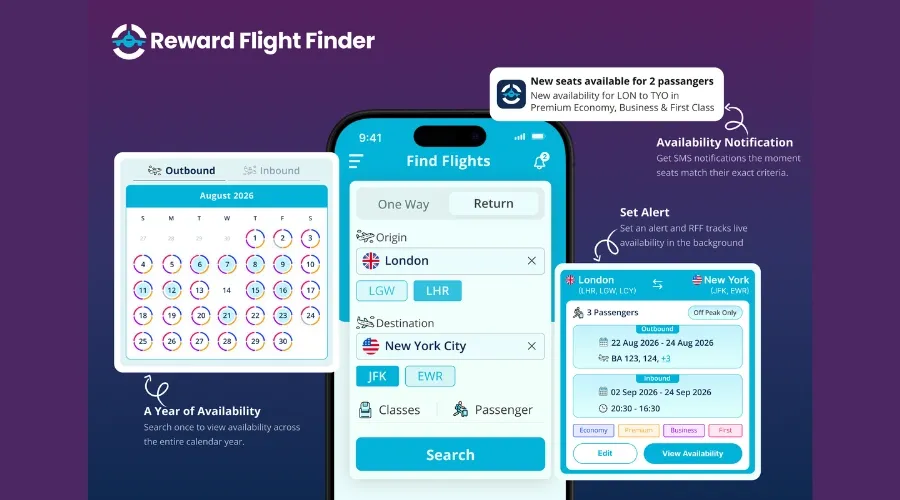
RFF is the go-to platform designed to help Avios collectors secure British Airways reward seats without endless manual searching. Instead of refreshing BA.com day and night, members search once, set an alert, and RFF tracks live availability in the background — sending email or SMS notifications the moment seats match their exact criteria.
Travellers can view up to a year of availability in a single search via Availability Calendar or Worldwide Map, or search at flight-level precision. RFF’s system scans specific airports, flight times, aircraft types and individual BA flight numbers, making it possible to target exact departures such as overnight flights, BA Club Suite-equipped aircraft, or rotations needed for upgrades and Companion Voucher bookings.
With paid tiers unlocking Instant Alerts, Flight-by-Flight tracking, multi-airport monitoring and a BA Club Suite filter, RFF turns Avios strategy into a practical, book-ready plan — whether someone is redeeming for one Business Class seat, two seats using a Companion Voucher, or tracking hard-to-spot availability for premium cabin upgrades.
Plans include Bronze (free), Silver and Gold, with a mobile app available on iOS and Android for alerts on the go.